Crunchy drifts of leaves can look harmless on the pavement. After a windy night, it’s tempting to grab a broom, scrape them off your drive and send the whole lot into the gutter so the next rainstorm “washes them away”.
That neat sweep could cost you. In many parts of the UK, pushing leaves into the road or down a drain can be treated as littering, fly‑tipping or even creating a highway hazard – all of which carry potential fines. What your council actually wants you to do is surprisingly simple: keep the leaves on your property and let them quietly rot into free compost.
Fallen leaves are a nuisance for a few weeks. Handled well, they become one of the cheapest soil improvers you’ll ever get.
Why sweeping leaves into the gutter isn’t harmless tidying
Leaves don’t disappear in the rain; they travel. Once they hit gutters and road drains, they clump together, block grates and back water up onto pavements and driveways. After a heavy downpour, that can mean standing water outside homes – and extra work and cost for your council’s drainage teams.
Wet leaves are also slippery. A patch that looked like a harmless brown mush can behave more like black ice. Cyclists, pedestrians and drivers all notice the difference when pavements and road edges are left coated.
From a council’s point of view, deliberately pushing leaves into the road is shifting a private problem into a public one. That’s why it can fall under the same rules as tossing a bin bag into a lay‑by or dumping grass cuttings over a fence, even though it may not feel as serious to the person holding the broom.
When you move leaves off your property and into the street, you haven’t “tidied up” – you’ve changed where the waste sits and who has to deal with it.
What the rules actually say
Most UK councils lean on a mix of national laws and local by‑laws. They don’t always spell out “leaves” by name, but the effect is similar.
In practice, sweeping leaves:
- Off your land and into the road or gutter can be treated as littering or fly‑tipping.
- Into a road drain or gully can be treated as causing or contributing to a blockage or flooding risk.
- Onto a pavement can be considered creating a slip or trip hazard.
Depending on where you live, authorised officers can usually issue an on‑the‑spot fixed penalty notice for littering or fly‑tipping, often in the region of £75–£150 for straightforward cases. More serious or repeated offences can be taken to court, where fines can go much higher.
Councils take a dim view in particular if:
- You use a leaf blower or broom to drive piles straight into the carriageway.
- You repeatedly sweep garden waste over the boundary wall onto a public verge.
- You block gullies that the council then has to clear to prevent flooding.
Not every stray leaf is a crime. Windblown leaves from street trees are a normal part of autumn, and councils accept that. What matters is intent and scale: are you deliberately relocating your garden waste into the public realm?
Common “innocent” mistakes that can land you in trouble:
- Clearing a private car park or forecourt by pushing everything out into the road.
- Hiring a gardener who blows or rakes waste into the nearest drain.
- Telling a teenager to “just get it off the drive” without saying where it should go.
If you’re unsure, your council’s website usually has a section on garden waste, leaf fall and what’s allowed. The simplest rule of thumb: if it grew in your garden, it should stay on your property until it’s properly disposed of.
What councils would rather you do with all those leaves
Councils aren’t trying to spoil autumn. They just don’t want to pay to fix problems that can be avoided. Most would much prefer residents to deal with leaves in one of three ways:
Use the brown/green garden waste bin
Many areas run a paid garden‑waste collection scheme. Bagged properly, leaves can go in there along with grass cuttings and small prunings.Take them to a household recycling centre
If you have a car and a large garden, a run to the tip with big bags of leaves is cheaper than a fine and keeps them in the green‑waste stream.Compost them at home
This is the option councils quietly love. It reduces collection costs, cuts lorry emissions and feeds your soil instead of their machines.
On council websites, buried between bin‑day calendars and bulky‑waste forms, you’ll often find a page explaining how to make leaf mould or home compost. Some authorities even offer discounted compost bins or run workshops.
The logic is simple: every bag of leaves you compost yourself is one less vehicle movement and one less drain to unblock.
The simple leaf‑mould trick councils actually prefer
You don’t need a perfect wooden compost bay to do something useful with leaves. A basic leaf‑mould setup takes about ten minutes, a quiet corner and almost no money.
At its core, leaf mould is just leaves that have been left long enough to break down into dark, crumbly material. Unlike full compost, it relies mostly on fungi, not kitchen‑scrap‑loving bacteria. That makes it slow but very forgiving.
What you need
- A pile of autumn leaves (ideally from your own garden)
- A large, strong bin bag or a simple wire‑mesh frame
- A garden fork or gloved hands
- A small amount of water, if leaves are bone dry
Aim for mostly “brown” leaves: oak, beech, hornbeam and fruit trees are all excellent. Avoid thick, leathery evergreen leaves (such as laurel or holly) or conifer needles in large quantities – they take much longer.
The basic method, step by step
Collect the leaves
Rake or sweep leaves from your lawn, paths and beds into a pile. Remove obvious rubbish like stones, twigs and plastic.Contain them
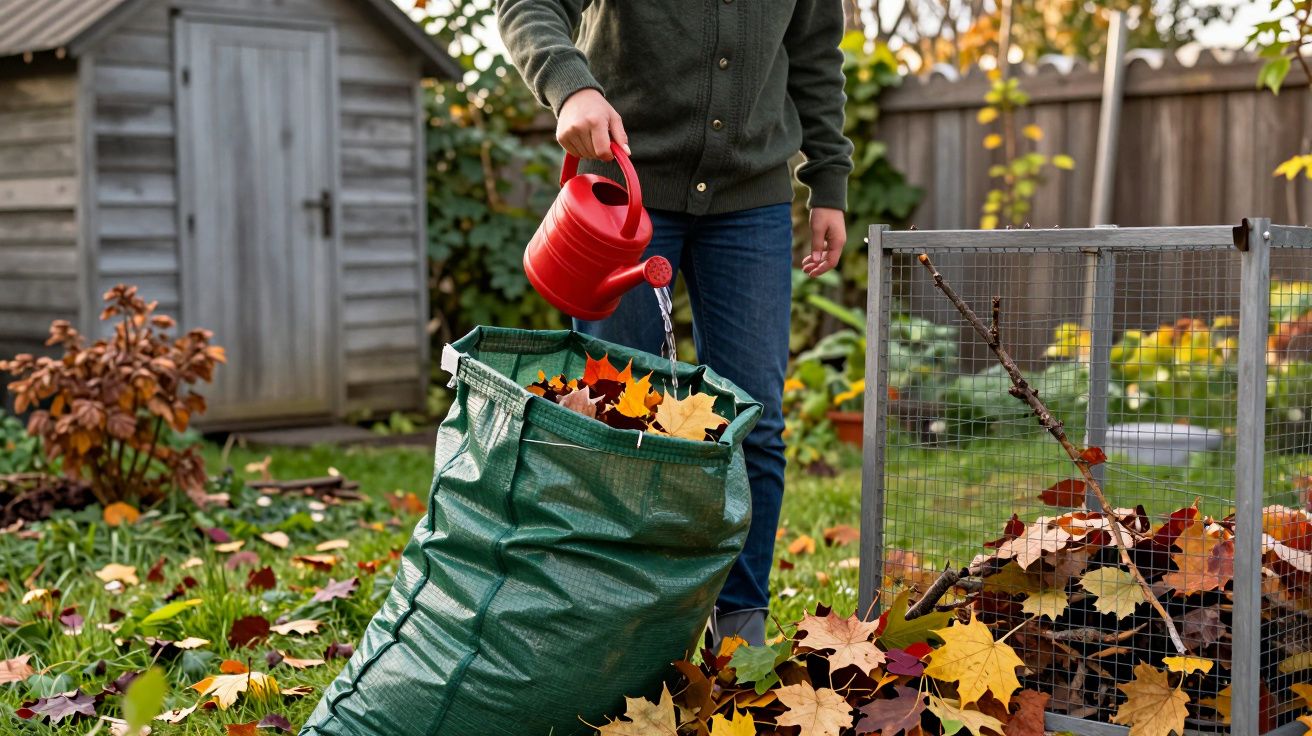
- For a bag: Fill a heavy‑duty bin bag loosely with leaves. Sprinkle with a little water if they’re very dry. Tie loosely, then poke a few air holes in the sides and bottom with a garden fork.
- For a cage: Make a simple ring out of wire mesh or old fencing, secure it with stakes, and tip your leaves in.
- For a bag: Fill a heavy‑duty bin bag loosely with leaves. Sprinkle with a little water if they’re very dry. Tie loosely, then poke a few air holes in the sides and bottom with a garden fork.
Tuck them away
Place the bag or cage in a shady, out‑of‑the‑way spot: behind a shed, under a hedge, or in a spare corner of the garden. You don’t need to turn or stir it every week.Forget about it (for a while)
Over 6–12 months, the leaves will slump, darken and slowly crumble. After a year, you’ll have a rough, fibrous material excellent as mulch. Leave it 18–24 months and it becomes fine, earthy leaf mould.
The trick isn’t fancy kit. It’s containment and patience: keep the leaves put, give them air and time, and they quietly do the work for you.
How to use the finished leaf mould
Once your leaves have broken down:
- Spread a 2–5 cm layer over flower beds as a mulch to suppress weeds and lock in moisture.
- Mix into potting compost to improve water retention for container plants.
- Work into heavy clay soil in autumn to slowly improve structure and drainage.
For gardeners, it’s the equivalent of a free soil upgrade every year. For councils, it’s one more property where autumn leaves never touch the gutter.
Small habits that keep you on the right side of the rules
A few simple changes make leaf season easier for you and less stressful for your local highways team.
Work “inwards”, not outwards
When raking or blowing leaves, always move them away from the pavement and road, not towards it.Keep drains visible
If there’s a road gully outside your home, don’t cover it with piles of leaves, even for an afternoon. If it’s already clogged with general debris, report it through your council’s online portal.Use your mower as a shredder
Running a mower over dry leaves on the lawn chops them into smaller pieces that break down faster in bins or leaf‑mould bags.Agree a plan with gardeners
If you pay someone to maintain your garden, make it clear that waste must stay on site or go to a proper disposal route – not into the gutter.Share space
If you have a big garden and a neighbour doesn’t, consider offering them a corner of your leaf‑mould cage. Two houses, one solution.
A quick comparison of common options:
| Option | Legal position | Main benefit |
|---|---|---|
| Sweep into gutter/drain | Can be treated as littering or causing obstruction | None – risk of fines and flooding |
| Council garden‑waste bin | Actively encouraged | Easy, regular collection |
| Home leaf‑mould composting | Strongly encouraged | Free soil improver, no transport needed |
FAQ:
- Are leaves from council‑owned street trees my responsibility if they land on my drive?
Yes, once they’re on your property, they’re generally yours to deal with, even if they fell from a public tree. Councils may clear pavements and roads, but they rarely collect from private gardens or drives.- Can I just brush leaves into the road if “everyone on the street does it”?
No. A common habit can still be an offence, and councils are increasingly clamping down when blocked drains or slippery pavements become a problem. Each person is responsible for where they move their own waste.- Is it legal to burn piles of leaves instead?
Bonfires aren’t banned outright everywhere, but smoke and smell can be treated as a statutory nuisance, and many councils strongly discourage burning garden waste. Composting or using garden‑waste collections is usually safer and more neighbour‑friendly.- What about a few leaves brushed off my car into the road?
A small number of windblown leaves shaken off a vehicle is unlikely to be pursued. The issue is deliberate, repeated movement of large volumes of garden waste into public spaces.- How long do I need to keep leaf mould before I can use it?
Around a year for a rough mulch, up to two years for a fine, crumbly conditioner. If you start a new bag every autumn, you’ll have a steady supply coming through with very little effort.





Comments
No comments yet. Be the first to comment!
Leave a Comment