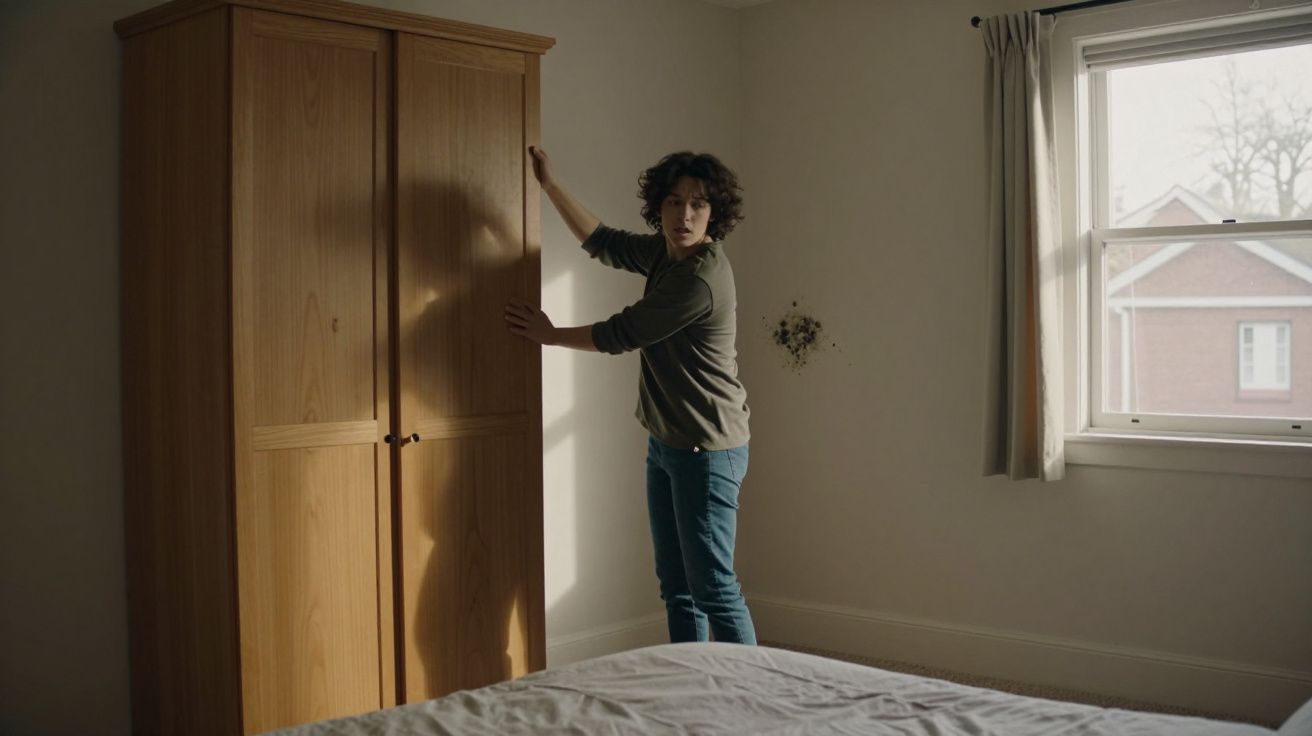
The bedroom felt almost proud of itself this year. New double‑glazed windows, a heavy winter duvet, radiators ticking on just long enough to take the edge off the cold. You cracked the handle up to that reassuring “tilt” and left it there all season, half‑convinced you’d hacked the mould problem and the heating bill in one go.
Fresh air without a freezing draught. Window “a bit open” that you never have to think about again. It looks like common sense.
Then April arrives with that sour, earthy smell. You pull the wardrobe forward to switch winter coats for summer dresses and your stomach drops. The paint is freckled black and grey. The skirting board flakes at your touch. The back of the wardrobe feels damp and faintly furry.
The open window you trusted all winter might have been quietly feeding the very mould you were trying to avoid.
The winter habit that feels sensible – but isn’t
Tilt‑and‑turn windows were sold to many of us as the efficient, civilised answer to “just leave it on the latch”. They crack open at the top, let out steam, and don’t invite burglars. Surveyors across the UK now walk into homes and hear the same line: “We always leave the bedroom window on tilt to stop damp.”
On paper, it sounds like you’re doing everything right. You’re not drying clothes on radiators (much). You’re putting lids on pots (usually). The bathroom fan even works if you jab it hard enough. Leaving a window on tilt feels like an extra safety valve.
The trouble is, winter air and cold external walls don’t play by paper rules. A window that’s constantly a little bit open changes the way air moves in the room. Instead of gently airing the whole space, it turns your wall into a cold magnet for moisture.
Especially the bit hidden behind that bulky wardrobe you rarely shift.
What your tilted window is really doing to your walls
Inside every lived‑in home there’s a quiet fog of moisture: showers, kettles, breathing, cooking, laundry. In a typical winter evening, a family can easily release several litres of water into the air without noticing. Warm air holds this vapour quite happily - until it brushes up against something cold.
Leaving a window on tilt all day in winter has three big effects:
It cools the wall and ceiling around the window.
Cold outside air trickles in and spills down the wall like an invisible waterfall. The plaster around the window and in the nearest corners sits several degrees colder than the rest of the room.It pulls warm, moist air past the coldest surfaces.
The room’s air is still full of water vapour from normal living. That moist air drifts towards the window, hits the chilled surfaces, and drops its moisture as condensation - not just on the glass, but on the coldest wall patches nearby.It creates tiny micro‑climates you never see.
Behind wardrobes, in corners with heavy curtains, under window sills blocked by furniture, you get cool, still pockets of air. These areas can sit right on the “dew point” - the temperature where water in the air turns back into liquid and soaks into paint, plaster and MDF.
So while the room feels reasonably fresh when you walk in, some parts of your wall may have been cycling through damp‑then‑almost‑dry for months. That’s exactly what mould spores are waiting for.
Soyons honnêtes : personne ne calcule la température de son mur avant d’ouvrir la fenêtre. You tilt, you hope for the best, and you get on with your day.
But from a building physics point of view, you’ve created a small, efficient mould factory in the places you look at least.
Why wardrobes and corners suffer first
Surveyors will tell you they can almost draw the mould before they see it. Same places, same shapes, same shocked faces when the wardrobe moves.
Wardrobes and big chests of drawers cause trouble because they:
- Sit tight against cold external walls, especially in rented bedrooms where space is tight.
- Trap a thin layer of air that barely moves.
- Often contain clothes and boxes pressed hard against the back panel, adding extra insulation to keep that wall cold.
From the room’s point of view, you’ve just built a big padded jacket over the chilliest section of wall. Warm air can’t circulate behind it properly. When that already‑cool wall is further chilled by a constantly tilted window above, the surface temperature drops even more.
Now add nightly reality:
- Two people breathing out warm, moist air for eight hours.
- A radiator that comes on for an hour at bedtime, then off again while you sleep.
- A window open on tilt all night, feeding in a small but steady stream of cold air.
By 3am, the bed feels cosy enough under the duvet. Behind the wardrobe, the wall is quietly reaching the perfect conditions for condensation. A film of moisture appears that never gets fully dried by morning heating. Do that for 100 nights in a row and the plaster loses the battle.
That’s why you find mould patches:
- Low down behind furniture.
- In the top corners near external walls.
- Along cold bridges like concrete beams or poorly insulated lintels above windows.
The mould didn’t arrive out of nowhere in March. It’s been slowly colonising a damp, cool, hidden landscape since November.
Signs you’ve got a hidden mould problem
You don’t have to wait until the back of a wardrobe looks like a forgotten sandwich. There are early warning signs that your “always on tilt” habit isn’t working in your favour:
- A musty, earthy smell when you open a wardrobe or chest of drawers.
- Clothes feeling slightly clammy or cold to the touch, even when dry.
- Condensation on the window frame or lower glass most mornings.
- Dark smudges or speckling in high corners, especially above external walls.
- Peeling, blistering, or discoloured paint around window reveals.
- Black dots appearing on silicone around the window or skirting.
If you’re renting, you might first notice it as a “weird smell” the day you move in the bed to hoover. Homeowners often spot it when redecorating, only to find the top layer of paint sliding off with the roller.
Left alone, surface mould can turn into deeper damage: crumbling plaster, swollen skirting boards, warped laminate. More importantly, the spores aggravate asthma, allergies and respiratory problems, particularly in children and older adults.
How to ventilate without feeding the mould
The answer isn’t to seal the place up and never open a window again. It’s to ventilate differently.
Building scientists and surveyors tend to recommend:
1. Go for short, sharp airing instead of “always a bit open”
Open windows wide for 5–15 minutes, a few times a day, rather than on tilt for 24 hours. Ideally:
- Open opposite windows or a window and a door to create a brief cross‑breeze.
- Do this after showers, cooking, or drying clothes indoors.
- Turn the heating off or down while you do it, so you don’t just throw hot air straight outside.
The walls stay warmer overall, but the damp, stale air actually leaves the room.
2. Use trickle vents and fans properly
If your windows have trickle vents, keep them open in winter, not shut “to save heat”. They provide a slow, background replacement of air without creating ice‑cold strips of wall in one spot.
- Make sure bathroom and kitchen extract fans run long enough to clear steam - 15–20 minutes after use is ideal.
- If you have a continuous‑running fan, resist the urge to turn it off at the isolator switch.
It feels counter‑intuitive when bills are high, but controlled ventilation is cheaper than repairing mouldy plaster or dealing with ill health.
3. Balance heating with airflow
Stone‑cold rooms plus a tilted window are mould magnets. Aim for:
- Gentler, more consistent background heat rather than big blasts once a day.
- Keeping bedroom doors slightly open where possible, so moist air doesn’t build up in one space.
- Closing bathroom and kitchen doors while using hot water or cooking, then airing those rooms directly.
You’re not trying to turn your home into a sauna; you’re trying to avoid having very cold surfaces for damp air to cling to.
Bedroom furniture that doesn’t fight your walls
How you arrange the room can matter as much as how you open the window.
Surveyors routinely suggest:
- Leave a gap: 5–10 cm between large furniture and external walls so air can circulate.
- Avoid “boxing in” cold corners: Keep at least one external corner visible rather than wedged behind a wardrobe.
- Raise furniture on feet where possible: A little air under a chest of drawers goes a long way.
- Don’t pack wardrobes to the back wall: A bit of breathing room behind hanging clothes can stop stagnant, cold air pockets.
If the only wall a wardrobe will fit on is an external one under a window, try:
- Moving it a little away from the coldest section (for example, off the corner or lintel area).
- Using a breathable, slatted‑back wardrobe rather than something with a solid MDF panel tight to the wall.
- Checking behind it once a month through winter, not just at spring clean time.
Think of yourself as managing tiny weather systems in your home. Anywhere air can’t move is a place damp can linger.
Quick checks: is it condensation or something worse?
Not all black marks are equal. A tilted window habit mainly drives condensation mould, which has some tell‑tale signs:
| What you see/smell | Likely cause |
|---|---|
| Patchy black spots in corners | Condensation |
| Mould behind wardrobes and sofas | Condensation |
| Damp only on lower walls, tide mark | Rising damp/other |
| One localised brown stain | Leak/penetrating |
If you have:
- Strong, musty smells even in summer.
- Damp patches that feel wet to the touch regardless of weather.
- A horizontal “tide mark” on ground‑floor walls.
…then there may be structural issues or leaks as well. That’s the moment to call a qualified surveyor rather than just airing and hoping.
When to ask for help (and what to say)
In rented homes, the line between “lifestyle condensation” and building defects is often blurry, and arguments about “you just need to open the windows” get old fast. If you’re worried:
- Take photos of mould as soon as you spot it, including behind furniture.
- Note dates and weather, especially after heavy rain or very cold snaps.
- Explain what you already do: how often you heat, open windows, use fans and so on.
A decent landlord or housing association should be willing to look at ventilation, insulation and possible cold bridges, not simply blame your laundry habits. If they suggest leaving windows on tilt all winter as the only fix, you now have a clear, practical reason to push back.
For homeowners, a damp and timber survey can feel like a luxury, but catching a pattern early often means cheaper, simpler fixes: extra vents, minor insulation improvements, or rearranging furniture, rather than full replastering.
Living with winter without growing a rainforest
No domestic routine will give you perfect, lab‑grade humidity. Real homes have spaghetti‑boiling, sock‑drying, toddler‑bathing chaos built in. The aim isn’t perfection; it’s quietly nudging the odds back in your favour.
Think in patterns, not heroic one‑offs:
- Short, wide openings instead of permanent “just ajar”.
- Warm enough walls, not just warm air.
- Furniture that lets your walls breathe.
- A quick winter ritual of “check behind the big things” before mould gets a head start.
The next time you reach for that tilt handle in October, pause for half a second. You can still open the window - just decide whether you’re about to freshen the room, or slowly feed the black speckles you don’t want to meet again in spring.
Key points at a glance
| Point | Detail | Why it matters |
|---|---|---|
| Tilt cools walls | A window on tilt all winter chills nearby walls and corners | Cold surfaces attract condensation and mould |
| Hidden pockets | Wardrobes and tight corners trap still, moist air | Mould grows where you rarely look |
| Change the pattern | Short, wide airing plus gaps behind furniture | Keeps walls warmer and drier long‑term |
FAQ:
- Is it ever OK to leave a window on tilt overnight?
Occasionally, yes - for example after painting or in a stuffy summer room. In winter, doing it every night for months can over‑cool walls and encourage condensation. Shorter, wider openings are usually safer.- Won’t opening windows wide waste more heat than leaving them on tilt?
A brief, wide opening swaps moist air for drier outside air without giving the walls time to cool right down. Leaving a window on tilt for hours constantly chills the surfaces, which is worse for both comfort and mould risk.- Can a dehumidifier replace opening the windows?
Dehumidifiers help, especially in small, hard‑to‑ventilate homes, but they don’t bring in fresh air or remove indoor pollutants. They work best alongside sensible ventilation and heating, not instead of it.- How big should the gap be behind wardrobes?
As a rule of thumb, 5–10 cm is enough to allow airflow. If the wall is very cold or already affected, aim for the larger end of that range and check the area regularly through winter.- Do mould‑resistant paints solve the problem?
They can slow mould returning on the surface, but they don’t fix the underlying cold and moisture issues. Without better ventilation and warmer wall surfaces, spores tend to come back sooner or later.






Comments
No comments yet. Be the first to comment!
Leave a Comment