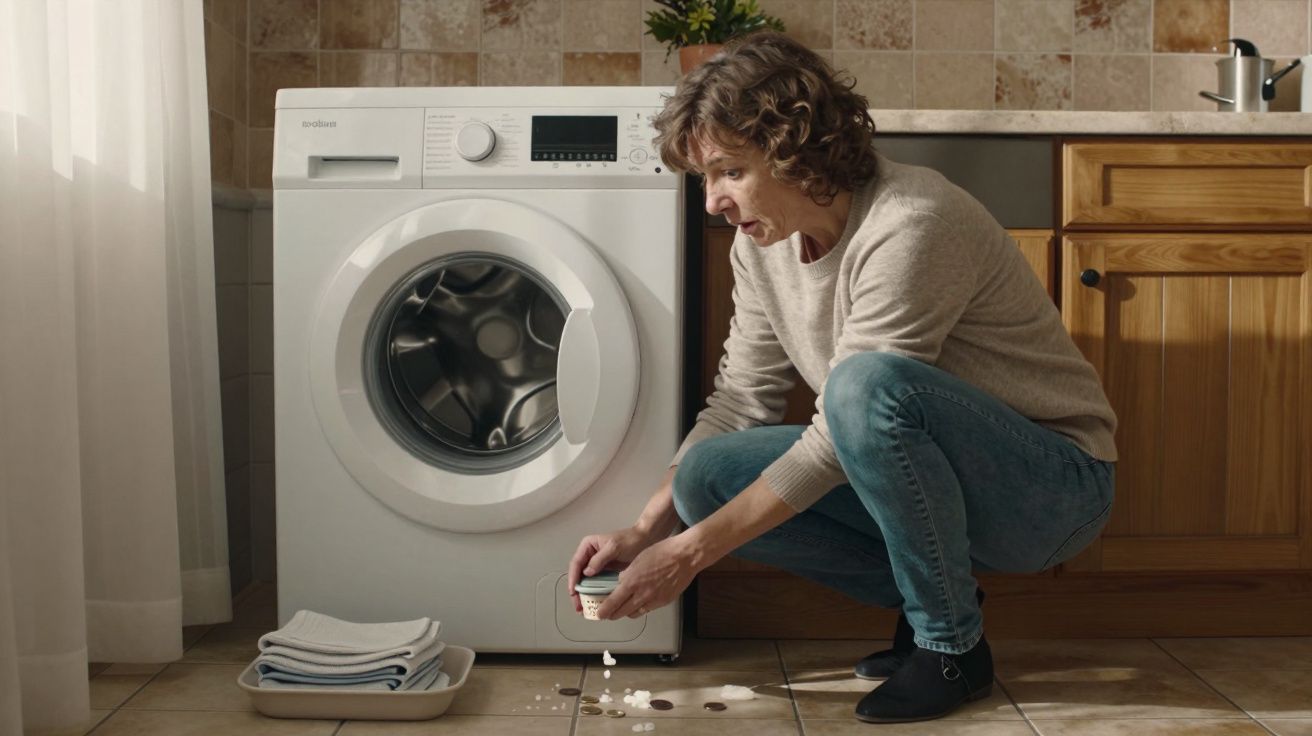
The wash finishes. The door clicks. Steam rolls out like you’ve done everything “right” - hot cycle, plenty of detergent, maybe even an extra rinse - and then it hits you: that damp, cellar-ish pong that clings to towels and makes clean clothes feel suspicious.
Most people blame hard water, cheap powder, or the machine being “old”. Appliance engineers will tell you the boring truth: smells usually come from trapped sludge and standing water, not the temperature you picked.
The fix isn’t glamorous. It’s a small, hidden filter you’re meant to empty, plus a one-minute check around the seal that most of us never do until the kitchen starts smelling like a wet dog.
The hidden filter that turns hot washes “musty”
Down at the bottom front of many front-loading machines is a little flap - sometimes behind the kick plate, sometimes disguised as a neat square door. Behind it sits the drain pump filter (often called the “coin trap”), and it’s where lint, hair, tissue, buttons, and greasy detergent residue quietly build a compost heap.
Even if you run regular 60°C washes, that gunk can stay put. It holds onto water. It feeds bacteria. Then, on your next wash, the machine warms it all up and pushes that smell back through the drum.
Engineers see the same haul again and again: coins, bra wires, a child’s Lego piece, and a grey paste that looks like wet cement. That paste is usually a mix of body oils, fabric conditioner, and detergent that never fully dissolved.
How to empty it safely (and why “monthly” isn’t overkill)
Before you do anything, set expectations: water will come out. Sometimes a lot. If your machine sits in a tight kitchen gap, plan a quick escape route.
Here’s the low-drama method most techs use:
- Turn the machine off at the socket. (You’ll be putting hands near water; don’t skip this.)
- Lay a shallow tray (oven tray, roasting tin) and a couple of towels in front of the filter flap.
- If your machine has a little emergency drain hose, pull it out and drain into a bowl first. If it doesn’t, crack the filter open a quarter turn and let it trickle.
- Unscrew the filter fully, pull it out, and remove debris. Rinse the filter under warm water and wipe the housing with kitchen roll.
- Check the impeller (a small fan inside). It should move with a gentle “notchy” feel, not jammed solid.
- Refit the filter firmly, close the flap, then run a short rinse/spin and check for leaks.
Monthly is a sensible baseline if you wash a lot of synthetics, have pets, or use fabric conditioner. If you’ve just had the first musty outbreak, do it now, then again in two weeks - you’re often clearing a backlog.
The 60‑second check most people skip: the door seal sweep
If you only do one thing today, do this. Open the door and run your fingers around the rubber gasket, especially the lower fold where water sits.
You’re looking for three things:
- Black slime (mildew and detergent biofilm)
- Trapped fluff and hair (it wicks moisture and holds smells)
- Small items (socks, coins, hair grips) that stop proper drainage and rot in place
Wipe the seal with a microfibre cloth dipped in hot water with a drop of washing-up liquid. If there’s visible mould, use a purpose-made washing machine cleaner or a small amount of diluted bleach only if your manufacturer allows it - and rinse the area afterwards. The point isn’t to perfume the problem; it’s to remove the film the smell lives in.
Once you’ve done the sweep, leave the door ajar for an hour. That single habit stops the seal becoming a permanent swamp.
Why hot washes sometimes make the smell worse (briefly)
A hot cycle can loosen old residue in hoses, the sump, and around the drum. For a wash or two, that loosened muck can smell stronger - the same way a deep clean stirs dust before it settles.
If the filter and seal are dirty, heat simply accelerates the funk. It’s not that hot washes are “bad”; it’s that they can’t fix a blocked, biofilm-lined drain path on their own.
Think of temperature as the helper, not the hero.
A simple “no-fuss” reset routine engineers actually rate
You don’t need a dozen products. You need consistency and fewer things that feed residue.
- Stop overdosing detergent. Modern detergents are concentrated; too much leaves waxy build-up.
- Go easy on fabric conditioner, especially on towels. It coats fibres and leaves more for the machine to trap.
- Run a maintenance cycle (or an empty 60°C wash) monthly with a proper washing machine cleaner.
- Clean the drawer and its housing. Pull the detergent drawer out, scrub the underside, and wipe inside the slot where water sprays through.
- Ventilate after every wash. Door ajar, drawer slightly open. Dry beats scented.
If your clothes smell fine when they come out but turn musty as they cool, that’s often a clue the odour is in the machine’s damp parts rather than the wash water itself.
Quick diagnosis: what the smell is trying to tell you
Use this as a fast pointer before you start pulling the machine out.
| Smell pattern | Likely cause | First action |
|---|---|---|
| Musty/damp “cellar” | Biofilm in filter/seal, standing water | Empty pump filter + seal wipe |
| Sour/eggy | Water trapped, drain issue | Check filter housing and drain hose for kinks |
| Perfume-heavy but stale | Excess detergent/conditioner build-up | Reduce dosing + run maintenance cycle |
If there’s a persistent sewage smell, or water isn’t draining properly, don’t just mask it with hotter washes - that’s when you check the waste pipe setup and consider a professional visit.
FAQ:
- Should I empty the pump filter even if the machine seems fine? Yes. A “fine” machine can still be storing debris and stagnant water. Monthly is a sensible rhythm for most households.
- Will a 90°C wash fix the smell on its own? It can reduce bacteria, but it won’t remove coins, lint, and sludge from the filter or seal. Clean those first, then run a hot maintenance wash.
- Is it normal for water to come out when I open the filter? Yes. The filter sits in the drain path and often holds leftover water. Use a tray and towels, and drain slowly.
- Can I use vinegar instead of a washing machine cleaner? Many engineers avoid it because repeated acid use can affect certain seals and parts. If you want a sure bet, use a cleaner designed for washing machines and follow your manual.
- What if my machine still smells after cleaning the filter and seal? Clean the detergent drawer and run a maintenance cycle. If the smell persists with poor draining or gurgling, check the drain hose and waste connection, or book an engineer.




Comments
No comments yet. Be the first to comment!
Leave a Comment