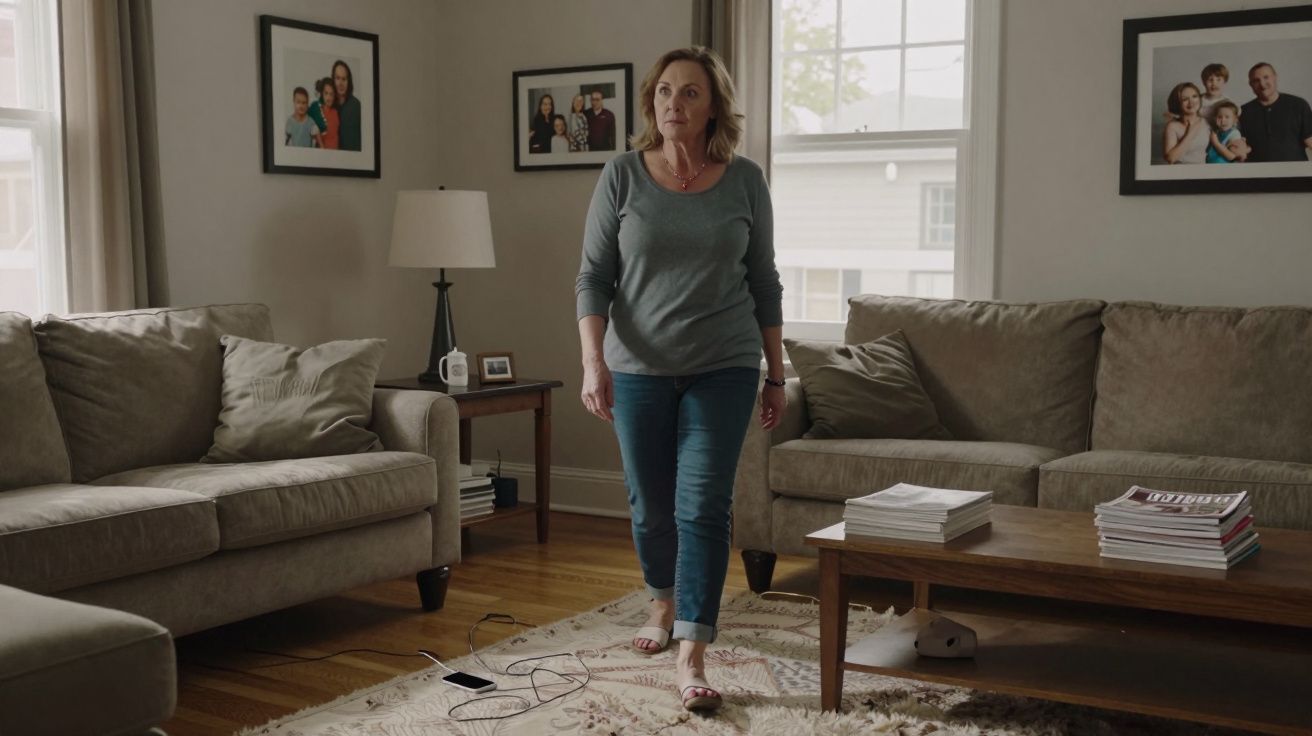
By the time you feel the wobble, it’s usually too late. One misjudged step on the stairs, a shin clipped on the coffee table, a tangle with a phone charger that seems to have grown a life of its own – and suddenly you’re on the floor, heart racing, wondering how something so small managed to launch you into full slapstick collapse.
Ask any A&E doctor and they’ll tell you the same story in a dozen variations. A perfectly ordinary evening, a perfectly ordinary hallway, a trip that “came out of nowhere”. Except it didn’t, not really. The hazard was sitting there for days, months, sometimes years. We just stopped seeing it.
Falls at home send more people to A&E than most of the dramatic things we imagine: motorway pile‑ups, sporting injuries, freak accidents. For older people, a simple trip can mean broken bones, loss of independence and months of slow, painful rehab. For younger adults, it can still mean torn ligaments, concussion, time off work and a sudden, sobering intimacy with crutches.
What A&E doctors quietly wish every household would do is not buy more gadgets, but take ten slow minutes to really look at how they move around their own home.
They call it lots of names – a walk‑through, a safety check, an environmental assessment – but the simplest version is this: a 10‑minute “walking audit” of your everyday routes that exposes the trip hazards your eyes have learned to ignore. No forms, no measuring tape, just you, your feet and a slightly more suspicious attitude to your own furniture.
The 10‑minute lap that changes how you see your home
We tend to imagine serious accidents as big, cinematic moments: ladders sliding, tiles falling, dramatic slips on icy steps. In reality, what fills waiting rooms is often painfully mundane. Loose mats, dim landings, that one step that’s “always been a bit wobbly”. The villain is rarely bad luck. It’s repetition.
A&E teams see the pattern so often it’s almost boring. The same kind of rug, the same type of worn slipper, the same dark patch on the staircase where the bulb’s been blown for weeks. Patients describe it as a one‑off, but the environment tells a different story: this was an accident waiting its turn.
The idea behind a walking audit is simple: you deliberately interrupt that autopilot. You walk your normal routes – bed to bathroom, sofa to kitchen, front door to bin – slowly and suspiciously. You pay attention to what you step on, brush past and reach for. You notice what would happen if you were tired, dizzy, carrying a washing basket, or slightly unsteady on your feet.
What looks ordinary at full speed suddenly feels a bit… precarious when you move through it like someone who does not have a spare hip in the cupboard.
How to do a walking audit (no clipboard required)
You don’t need a professional assessor to get most of the benefit. A&E doctors often talk patients and families through a version of this after a fall. Here’s the stripped‑back version you can do today.
Step one: Pick your moment – and your shoes
Choose a time when the house is in its usual state, not after you’ve done a deep clean. If you normally walk around in socks or slippers, wear those. If you pad around half asleep at night, do one lap then as well, with the lighting you actually use.
You’re not trying to impress anyone. You’re trying to catch the hazards that exist on a Tuesday evening when the post is still by the door and the laundry basket is in the hallway.
Step two: Walk your real routes
Do three short laps:
- Daytime lap – front door to kitchen, kitchen to living room, living room to bathroom.
- Stairs lap – ground floor to bedroom and back, using the handrails (or not) as you normally do.
- Night‑time lap – from your bed to the bathroom and back, using your usual lighting.
Move slowly. Pretend you’ve just had flu, or you’re carrying a sleeping child, or your ankle is sore. Suddenly that minor wobble on the stair carpet feels less charming.
Step three: Ask three questions in every space
As you walk, pause in each area and ask:
- Can I see clearly? Any dark patches, harsh glare, or places where your eyes have to adjust?
- Can I step safely? Loose edges, cables, rugs, clutter, wet patches, uneven thresholds?
- Can I reach without stretching? Things you regularly grab that make you lean, twist or climb?
If the answer is “not really” to any of these, that’s a hazard. Not a theoretical one – a very real one that already exists for you, your guests, and anyone whose balance isn’t brilliant.
Step four: Fix one thing now, list the rest
You don’t have to turn your home into a hospital ward overnight. Pick one hazard you can fix immediately – move a cable, replace a bulb, pick up the shoes scattered on the stairs. Then jot down a short list of jobs for later: rug grippers, a second handrail, a brighter bulb on the landing.
The point is not perfection; it’s momentum. Every obvious hazard you remove is one less reason for you or someone you love to end up in a hospital gown at 2 a.m.
1. Front door and hallway: where falls like to start
Hallways are the backstage area of our lives. Post, parcels, school bags, damp umbrellas, sports kits – anything that doesn’t yet have a place tends to land here. Which is exactly what your feet do not need.
Common hallway hazards A&E staff hear about again and again:
- Shoe drifts by the door that turn into an obstacle course.
- Doormats that slide on laminate or tiles when they’re wet.
- Loose post or parcels left exactly where you step in.
- Coats and bags hung so low they brush your head or block your view of the floor.
During your audit, stand in the doorway and watch what your feet have to do. Do you step over things as standard? Twist sideways to reach a handle or key hook? Skid slightly when it’s raining?
Small fixes go a long way here: a stable shoe rack, non‑slip backing under mats, a habit of putting parcels on a table not the floor, hooks high enough not to turn you into a limbo dancer.
2. Stairs and landings: the repeat offenders in A&E
Stairs are where a “near miss” can turn into something nasty in seconds. Broken wrists, collarbones, ribs and hips all have a strong friendship with badly kept staircases.
On your stair lap, notice:
- Handrails – Is there one on at least one side, all the way up? Is it solid, not wobbly?
- Carpet or treads – Any frayed edges, loose runners, raised strips?
- Clutter – Books, toys, laundry piles sitting on the steps “to go up later”?
- Lighting – Can you clearly see every step at night, especially the top and bottom?
A brutally honest test: try going up and down once holding something in one hand – a laundry basket, a stack of towels. If that makes you noticeably less steady, that’s your sign that you rely heavily on that free hand. A second handrail or a firm personal rule of “no carrying bulky things on the stairs” might be worth more than any wearable tech.
3. Bathroom: where water meets smooth surfaces
The bathroom is the place where gravity gets help from soap, steam and smooth tiles. A&E doctors see everything from bruised ribs to head injuries that started with “I just slipped getting out of the shower”.
As you walk your bathroom route, check:
- Floor around the bath or shower – does it stay wet or slick after use?
- Bath mats – do they actually grip when you step on them with damp feet?
- Things you hold onto – are you grabbing towel rails, sink edges or the glass screen to steady yourself?
- Getting in and out – do you have to step high, twist or duck around something awkward?
If the phrase “I just grab the…” appears in your internal monologue, that “something” should really be a proper grab rail, not a wobbly fixture that was never designed to hold your full weight.
Non‑slip stickers in the bath, a heavier mat with rubber backing and a cheap squeegee to clear puddles are unglamorous, but they beat the glamour of hospital lighting every day of the week.
4. Bedroom and the 3 a.m. toilet trip
A surprising number of nasty falls begin with “I got up in the night…” When you’re half asleep, your balance, vision and reactions are not at their sharpest. The path from bed to bathroom deserves more attention than it gets.
On your night‑time lap, actually dim the lights or use whatever you normally use – bedside lamp, phone torch, nothing at all. Then notice:
- Is there a clear path from bed to door? No piles of clothes, storage boxes, shoes?
- Rugs – are they flat and grippy, or do they curl and slide?
- Cables and chargers – trailing where your feet land?
- Light switches – can you reach a switch without crossing the room in the dark?
One cheap, low‑effort upgrade A&E doctors quietly love: plug‑in night lights in the hallway or bathroom that come on automatically after dark. They don’t fully wake you up, but they do let you see where the floor ends and the wall begins.
5. Living room: comfort, clutter and sneaky cables
The living room often wears two hats – relaxation zone and obstacle course. Coffee tables, footstools, pet beds, toys, laptop leads, TV cables… it doesn’t take much for a clear route to turn into a zigzag.
As you do your daytime lap, pause in the living room and ask:
- Do I have to step around the coffee table corner every single time?
- Are there cables crossing walking routes? (TV, lamps, phone chargers, gaming consoles)
- Are pet toys, beds or scratching posts underfoot?
- Do the edges of rugs catch under your toes?
A&E clinicians often mention one particular villain: extension leads snaking across the room because the nearest plug socket is in the wrong place. If you can’t rearrange the room, at least tape them neatly against the skirting or use a low cable cover, so they’re not waiting to hook your foot.
6. Kitchen and utility: when chores get risky
The kitchen is full of things that either spill, steam or break. Add in the fact that you’re often in a rush, carrying hot pans or heavy shopping, and the stakes go up.
During your audit, walk from doorway to sink, cooker, fridge and bin as you normally would. Look for:
- Spills and drips that spread across walking routes from sink or dishwasher.
- Mats in front of the sink that slide when wet.
- Step stools or chairs you climb on to reach upper cupboards.
- Bins or laundry baskets that force you into narrow, twisty routes.
If you catch yourself thinking “I always have to squeeze past that”, that’s a hazard. Move the bin, rethink where you store everyday items, fix the wobbly stool you’ve been trusting with your bones.
The red‑flag hazards A&E doctors wish you’d fix today
There are a few things emergency staff see so often they practically have them on a bingo card. If you spot any of these on your walking audit, they go straight to the top of the list:
- Cluttered stairs – anything stored on steps, even “just for now”.
- Loose, curling or sliding rugs, especially on hard floors or at the top of stairs.
- Poor lighting on landings and corridors, including blown bulbs you’ve been ignoring.
- Trailing cables across any regular walking path.
- Unstable furniture used as a step – chairs, wobbly stools, stacked boxes.
- Sloppy footwear – backless slippers, stretched‑out socks on smooth floors.
None of these items are glamorous to fix. They don’t make good Instagram content. But they’re the sort of quiet, unshowy changes that mean you never meet the on‑call orthopaedic team.
Why this isn’t just a “for older people” thing
It’s easy, especially if you’re fit and under 60, to file all this under “future me problems”. Falls are something that happen to frail people, on adverts in GP waiting rooms, not to you with your gym membership and busy diary.
But that’s not really how A&E caseloads look. Younger adults trip over toys while carrying toddlers, fall down stairs after a drink, slip in the shower after football, twist ankles on cluttered landings while answering the door. Pregnancy, illness, a sprained knee from five‑a‑side – all of these can turn your usually reliable balance into something far more tentative.
A safe home isn’t just a kindness to future you; it’s a favour to every tired, stressed, distracted version of you who will barrel through that front door over the next decade.
And then there are guests: parents, grandparents, friends recovering from surgery, neighbours dropping by. Making your space less trip‑prone is a fairly gentle way of saying “I’d quite like you not to break a hip while you’re here, thanks”.
Turn the audit into a quiet habit
The power of a walking audit isn’t in doing it perfectly once; it’s in repeating it when life changes. New baby, new puppy, new flatmate, new piece of furniture, new health diagnosis – all of these reshape how you move through your rooms.
A simple rule of thumb: every time something significant changes in your home or your body, do another 10‑minute lap. You’ll notice different things each time.
Here’s a compact prompt you can pin to the fridge:
| Area | 30‑second question |
|---|---|
| Hall & stairs | Could I get through here safely, carrying a full laundry basket? |
| Bathroom | Would someone unsteady on their feet slip here? |
| Bedroom & night route | Can I walk this half asleep without tripping on anything? |
It’s not about living in fear of your own carpet. It’s about bringing accidents down from “out of the blue” to “quite unlikely, actually”, with ten minutes of deliberate walking and a slightly fussier attitude to your rugs.
The boring fixes that quietly protect you
The glamour of home improvement is all in colour charts and stylish taps. The glamour of avoiding A&E lies in:
- A second handrail on the stairs.
- A £5 pack of non‑slip rug grippers.
- A handful of plug‑in night lights for the hallway.
- A sturdier bath mat and a proper grab rail.
- A cable tidy that keeps leads where they belong: out of your feet’s way.
You’ll forget most of these changes within a week. That’s the point. Safety works best when you can’t feel it – when your home just quietly supports you, rather than waiting to trip you as you pass.
FAQ:
- Does a walking audit really make a difference, or is it just common sense? Most of it is common sense you already know, but no longer act on. The value lies in slowing down enough to notice where your day‑to‑day behaviour and your environment don’t quite match. A&E doctors consistently see fewer repeat falls in people whose homes have had even basic hazards removed.
- How often should I repeat the audit? Aim for every 6–12 months, and any time something changes – a move, a new piece of bulky furniture, a new baby or pet, or after an illness or operation that’s affected your balance or strength.
- Isn’t this over the top in a small flat? Smaller spaces can actually be riskier, because there’s less room to dodge clutter or re‑route around hazards. The audit in a flat might take five minutes rather than ten, but it’s still worth doing.
- What if a family member rolls their eyes at all this? Make it about convenience, not catastrophe: “If we move this and fix that rug, nobody will stub their toe or spill coffee for the tenth time.” People are often more willing to prevent everyday annoyances than hypothetical injuries – but the safety benefit quietly comes along for the ride.


Comments
No comments yet. Be the first to comment!
Leave a Comment