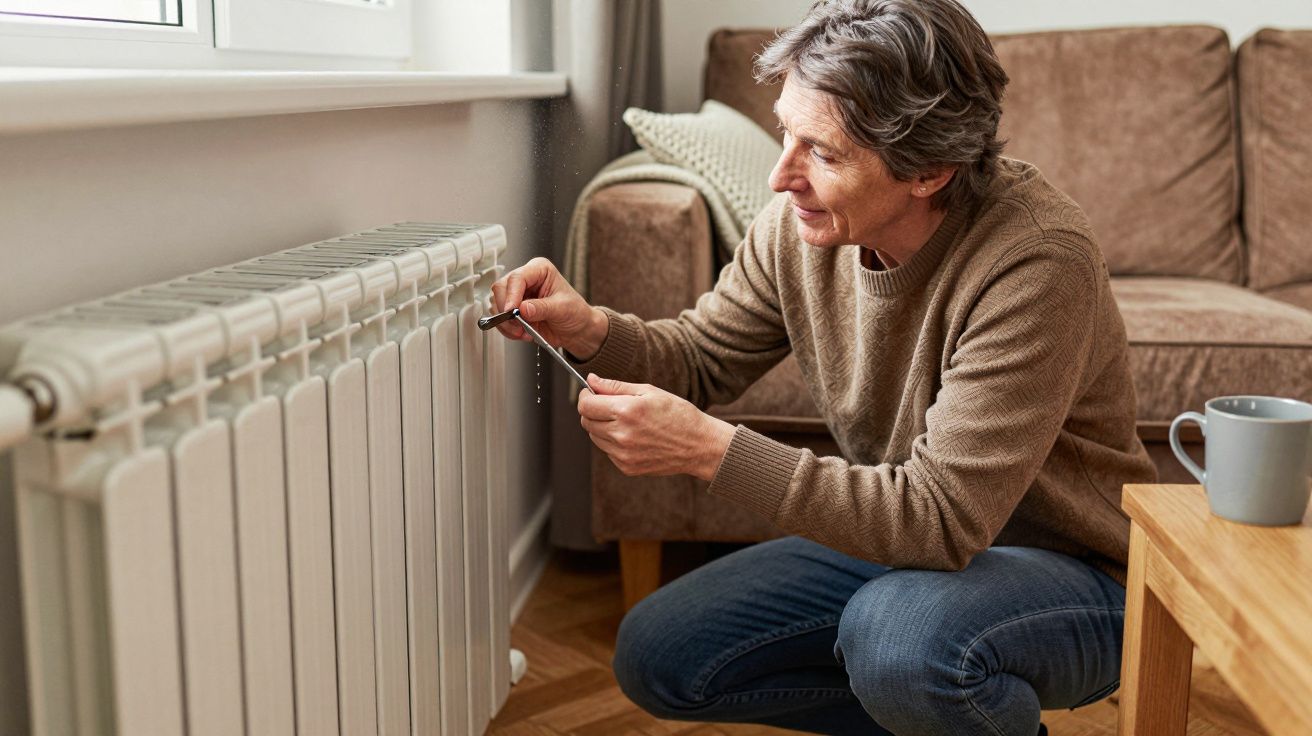
The first cold snap always lands the same way. You turn the heating on, you wait for that cosy “radiator smell”, and then you put your hand on the panel and feel it: hot at the top, stubbornly cold at the bottom. The room never quite warms up, but the boiler’s working and the pipes are warm, so it’s hard to know what to blame.
Most people reach straight for the bleed key and stop there. Sometimes that fixes it. Often it doesn’t, because the problem isn’t just air - it’s flow. Heating engineers see this pattern every winter: radiators that look “on”, but are only half doing the job.
Here’s the five‑minute bleed‑and‑balance check they use to stop rooms staying chilly all season, without turning your thermostat into a hostage negotiation.
What “hot at the top, cold at the bottom” actually means
A radiator warms evenly when hot water can travel through it and give up heat across the whole panel. When the top is hot but the bottom is cold, one of two things is usually happening.
Either there’s air trapped at the top (so water can’t fully fill the radiator), or the radiator isn’t getting enough flow (so the hot water takes the easiest path elsewhere and your panel only half participates). Sludge can also cause cold sections, but that tends to show as cold patches rather than a clean top‑hot/bottom‑cold split.
A useful tell: if the radiator is hot at the top and the pipework at the bottom is warm, think flow/balancing. If it’s hot at the top but one bottom pipe is noticeably cooler, think air first, then balancing.
The 5‑minute bleed‑and‑balance check (engineers’ quick routine)
You don’t need to strip anything apart. You’re doing a quick diagnosis, then a tiny adjustment that often makes a disproportionate difference.
Step 1: Start with the boring safety bit (30 seconds)
Turn the heating on and let it run for 10–15 minutes. You want the system warm enough to show you what’s really happening, not what it might do.
Have a cloth ready, and keep kids/pets away from valves. Radiators and pipes can get properly hot.
Step 2: Bleed the problem radiator (1 minute)
Use a radiator key on the bleed valve (top corner). Turn slowly until you hear air hiss out. When a steady dribble of water appears, close it.
Then do one quick thing people forget: check boiler pressure. If it’s dropped below your usual range (often around 1.0–1.5 bar when cold, but follow your boiler’s markings), top up via the filling loop if you know how. Low pressure can undo your good work.
Step 3: Feel the radiator again - and be honest (30 seconds)
Give it a couple of minutes. If the radiator now warms more evenly, you’ve likely nailed it.
If it’s still hot at the top and cool at the bottom, bleeding wasn’t the main issue. That’s when balancing comes in.
Step 4: Do the quick “flow reality check” (1 minute)
Find the lockshield valve - usually under a plastic cap on one side of the radiator (the other side is the TRV or manual valve you use day‑to‑day).
Now compare your radiators:
- If some radiators get roasting fast (often those closest to the boiler) and the chilly one lags behind, your system is likely out of balance.
- If upstairs rads are fine but one downstairs rad is always half‑cold, balancing often fixes it.
- If multiple radiators are cold in patches, that leans more towards sludge and a clean/powerflush conversation.
Step 5: Make one small balancing move (1–2 minutes)
Balancing is basically rationing. You slightly restrict the radiators that are “greedy” so the slower ones get a fair share of hot water.
Do this:
- Pick one radiator that heats up very quickly (often near the boiler).
- On its lockshield, turn it clockwise a quarter‑turn to reduce flow.
- Wait a few minutes and check whether your problem radiator improves.
Keep changes small. You’re nudging, not wrenching. If you go too far you’ll create new cold rooms and spend the evening chasing your tail.
The aim is not identical temperatures everywhere. It’s “no radiators hogging the flow while others starve”.
A mini checklist that stops you doing the wrong fix
A lot of winter DIY goes wrong because the symptom is right, but the cause is different.
- Top hot, bottom cold across the whole panel: bleed first, then balance.
- Cold patchy sections (especially bottom corners): likely sludge/debris; balancing won’t remove it.
- Radiator cold but pipes hot: valve/lockshield/TRV pin can be stuck.
- Only one radiator misbehaves and it’s far from the boiler: balancing helps, but also check the lockshield isn’t nearly closed already.
If you have a TRV, try turning it fully up and down a couple of times. A stuck pin can mimic a balancing issue and it’s a quick win.
The “two mistakes” engineers wish people would stop making
The first is bleeding every radiator on a whim and then forgetting to check pressure. You end up with less water in the system, poorer circulation, and a boiler that’s working harder for less heat.
The second is cranking lockshields wildly. Balancing is subtle. Quarter‑turns, a little patience, and checking the effect is how you avoid making one room perfect and three rooms miserable.
When to stop and call someone
If you’ve bled, pressure is fine, and balancing makes no difference - or the radiator is cold in heavy patches - get a heating engineer in. That’s especially true if you hear boiler kettling noises, keep losing pressure, or have very old pipework.
A professional can confirm whether you’re dealing with sludge, a failing pump, a stuck valve, or a system that needs proper commissioning, not just tinkering.
| What you notice | Likely cause | Best next move |
|---|---|---|
| Hot at top, cold at bottom | Air or poor flow | Bleed, then small balancing tweaks |
| Cold patches (especially lower areas) | Sludge/debris | Cleaner/powerflush assessment |
| Pipes hot, radiator stays cool | Stuck valve/TRV pin | Free pin / valve check, then engineer if needed |
FAQ:
- Do I bleed radiators with the heating on or off? Off is safer and more common advice, but the key is consistency: bleed carefully, then re‑pressurise if needed. If you’re unsure, turn the heating off and let the system cool slightly.
- How much should I turn the lockshield when balancing? Start with a quarter‑turn at a time on the radiators that heat up fastest. Small changes, then wait a few minutes and reassess.
- Why did bleeding make my radiator worse? You may have dropped system pressure, reducing circulation. Check the boiler gauge and top up to the normal range for your system.
- Can a radiator be hot at the top and cold at the bottom because it’s “too big”? Not usually. That symptom is almost always air, flow imbalance, or sludge - not radiator size.
- How do I know it’s sludge and not just air? Air problems tend to affect the top and improve after bleeding. Sludge often causes stubborn cold patches that don’t shift, especially at the bottom, and may come with dirty water when drained.


Comments
No comments yet. Be the first to comment!
Leave a Comment