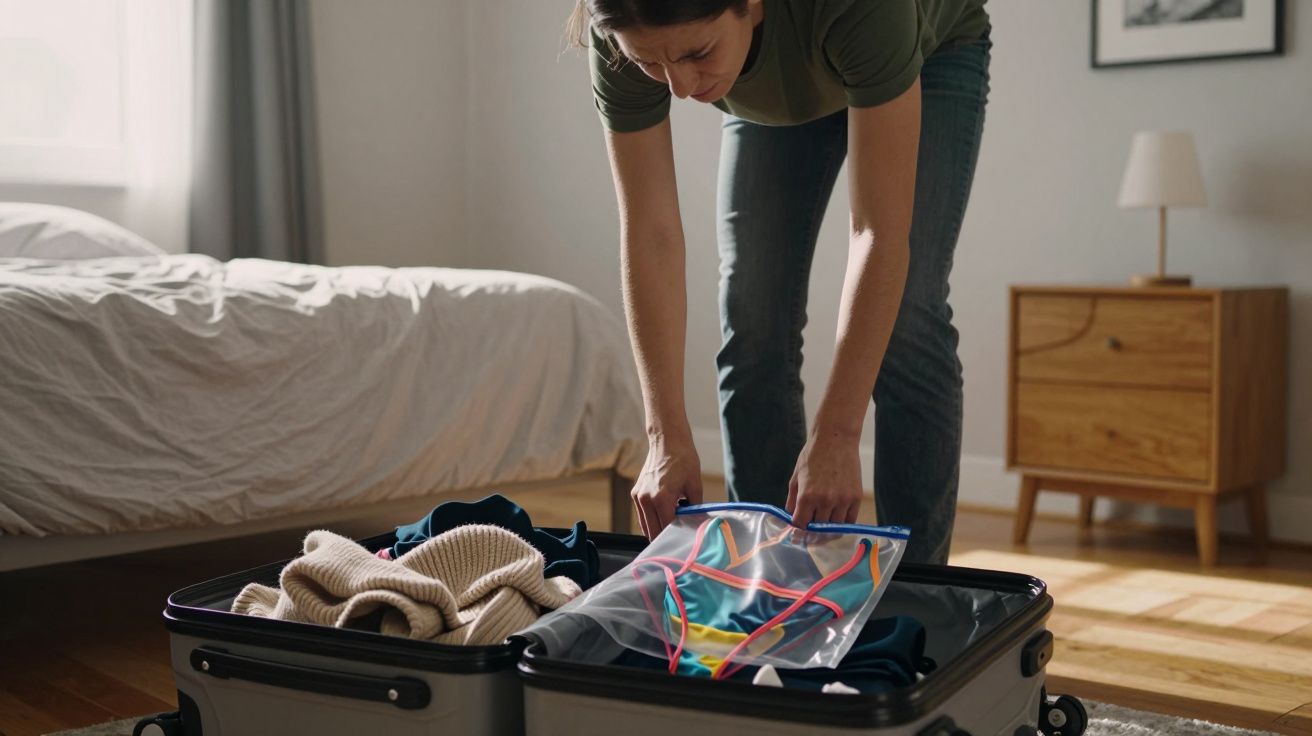
You know that slightly guilty feeling when you step over your still-packed suitcase for the third day in a row. You’re back from your trip, your toothbrush has migrated to the bathroom and your laptop is on the desk again, but half your clothes are still zipped inside that wheeled box by the bedroom door. You tell yourself you’ll deal with it after work. Or at the weekend. Or when you need that one jumper you’re pretty sure is at the bottom.
Another week passes. The suitcase gets nudged under the bed or into the spare room “just for now”. A few worn T‑shirts, a wool cardigan, the hotel laundry bag, maybe a damp swimming costume in a plastic pouch you forgot about – all quietly parked in the dark. Out of sight, out of mind.
Pest experts would like a word about that habit. Because to a clothes moth, your neglected suitcase is less “post-holiday chaos” and more “all-inclusive resort with full board”.
In the time it takes you to ignore your luggage, a tiny, almost invisible drama can start that ends with holes in your favourite jumper and a full-on wardrobe infestation. And it often begins with that one small decision not to unpack.
The forgotten suitcase that feels like home to moths
Clothes moths do not behave like the stereotypical moths that blunder towards lampshades on summer evenings. The main clothes-damaging species in UK homes – the common clothes moth and the case-bearing clothes moth – actively avoid light. They specialise in dark, still, undisturbed places with plenty of food for their young.
An abandoned suitcase ticks every box. It’s:
- Dark once it’s closed or pushed under furniture.
- Sheltered from draughts and regular cleaning.
- Lined with fabrics and seams that offer perfect hiding spots.
- Often filled with exactly the fibres moth larvae prefer to eat.
Pest technicians who inspect moth outbreaks regularly trace the starting point back to a loft suitcase, a “holiday bag” left half-packed in a cupboard, or a travel holdall storing “out of season” knitwear. What you think of as temporary storage looks like prime real estate to them.
To a clothes moth, a zipped case of crumpled, unwashed fabrics is the moth equivalent of finding a fully stocked kitchen in a locked, empty flat.
Why leaving clothes inside makes things worse
On their own, suitcases are not especially tasty. What matters is what you leave inside, and the state it’s in when you close that zip.
Clothes moth larvae feed on keratin – a protein found in animal fibres such as:
- Wool and cashmere.
- Silk.
- Mohair and alpaca.
- Fur, feathers and sheepskin.
Holiday clothes often come back with extra “seasoning”: sweat, skin flakes, body oils, food drips, drink splashes, sunscreen and traces of perfume. Those residues boost the nutritional value of natural fibres and make them softer and easier for larvae to chew.
The combination is exactly what they want:
- A wool jumper worn on chilly evenings.
- A scarf that brushed against your neck and hair.
- A dress with a tiny wine splash you meant to spot-clean.
- A hotel blanket or airline pillow you borrowed and stuffed into the case.
Fold those into a suitcase, don’t wash them, don’t disturb them, and you’ve created what one pest consultant described as “a slow cooker for moth damage”. It doesn’t matter if the trip was a weekend away or three weeks abroad; what matters is how long that packed environment stays sealed and untouched.
How a suitcase turns into a moth nursery
Clothes moths cause damage mainly at the larval stage. The adult moths – the tiny beige ones you occasionally see fluttering near the floor – don’t even have working mouthparts. Their only job is to mate and lay eggs somewhere safe and food-rich.
A neglected suitcase offers them that in several steps:
- Access: Adult moths are already somewhere in your home, or you carry in eggs and larvae from another place – a hotel wardrobe, a rented holiday cottage, an old chest in a friend’s spare room.
- Egg laying: Females lay dozens of eggs in or on suitable fabrics. Seams, folds, pockets and labels inside your luggage are high on the list.
- Hatching: Eggs hatch into tiny, off-white larvae that hide in fibres and feed quietly, often for weeks or months, depending on temperature.
- Growth: As they eat, they move around your packed clothes, nibbling irregular, patchy holes or thinning areas that only show up when light shines through.
- Spreading: When you eventually unpack, you shake out garments, hang them in the wardrobe or fold them into drawers – and carry hidden eggs or larvae straight into the main clothing store.
A typical life cycle looks like this:
| Stage | What it does | Where it hides |
|---|---|---|
| Egg | Waits to hatch | Seams, folds, labels, inside pockets |
| Larva | Eats fibres, does the damage | On or inside wool, silk, fur, feathers |
| Pupa | Transforms to adult | Cracks, bag linings, under furniture |
| Adult moth | Lays new eggs | Dark corners, back of wardrobes |
In a centrally heated UK home, that cycle can run quietly all year. So a suitcase you abandon after an autumn city break can be the source of springtime holes in your winter coat.
Telltale signs your luggage is part of the problem
It’s easy to blame “old age” or the washing machine for thinning jumpers and random holes. Clothes moth damage has a few clues that point specifically to unwanted guests – sometimes starting in your luggage.
Things to look and feel for:
- Small, irregular holes in woollens, especially near seams, underarms, collars and waistbands.
- Grazed or threadbare patches on cuffs, hems or folded edges that have been pressed together for a long time.
- Fine, silken webbing or tunnels on fabric surfaces, particularly inside pockets or under collars.
- Tiny white grains (moth droppings), a bit like coarse dust, on shelves below hanging clothes.
- Creamy, wriggling larvae about 4–7 mm long, sometimes inside little silken cases that they drag around.
- Adult moths: small, buff-coloured, often staying low to the ground or hovering close to wardrobes rather than flying at lights.
If you notice any of those in clothes that came straight out of a travel bag – or lurking in the bag itself – assume the suitcase is part of the infestation, not an innocent bystander.
Simple travel habits that cut the risk
The good news is that the most effective moth-proofing moves are boringly straightforward. They’re also much easier to do than repairing a full wardrobe’s worth of damage.
Right after every trip
Try to build a “home and unpack” ritual rather than leaving it to an undefined “later”:
- Unpack on hard flooring if you can, not on the bed. It’s easier to spot anything suspicious and to vacuum afterwards.
- Sort straight into wash piles: one for machine washing, one for dry cleaning, one for hand-wash or airing.
- Wash all worn items – even that jumper you only “wore for a couple of hours”. Use a full wash cycle; 60°C is ideal for cottons and linens that can take it.
- Freeze delicate woollens that can’t handle a hot wash: seal in bags and freeze at −18°C or colder for at least 72 hours to kill larvae and eggs.
- Vacuum the empty suitcase, paying attention to seams, pockets and lining folds. Dispose of the vacuum bag or contents promptly.
Think of unpacking as part of the holiday, not an optional chore. You’re not just tidying – you’re slamming the door on anything that hitched a ride home.
How and where you store luggage
Once it’s empty and cleaned, how you store the suitcase matters too:
- Store it dry and as bright as practical, not pushed against a damp wall or buried in an unventilated loft corner.
- Leave compartments slightly open if dust isn’t a problem, so light and air can circulate.
- Never use suitcases as long-term clothes storage, especially not for wool, cashmere or silk.
- Avoid stuffing “just one spare blanket” or winter coats into luggage for months – use breathable garment bags instead.
- Check any cases kept in lofts or under beds at least once a season for signs of moths or damage.
Small changes – unpacking the same day, running one extra laundry load, vacuuming a case before you shove it away – are often what stand between “no problem” and “months of painstaking pest control”.
If moths have already moved in
Finding damage or live larvae is depressing, but it doesn’t automatically mean throwing everything out. It does mean acting methodically and accepting that this is now a project, not a quick tidy.
Pest specialists usually recommend a blend of these steps:
- Isolate and treat affected clothes:
- Machine wash at the hottest safe temperature, or
- Freeze for at least 72 hours, or
- Dry clean (and tell the cleaner it’s for moths).
- Machine wash at the hottest safe temperature, or
- Clean storage areas thoroughly:
- Remove everything from wardrobes and drawers.
- Vacuum cracks, skirtings, shelf edges and under furniture.
- Wipe hard surfaces with a mild detergent solution.
- Remove everything from wardrobes and drawers.
- Treat luggage as contaminated:
- Vacuum and, if materials allow, lightly steam the interior.
- Store it empty in a bright, inspected area until you’re confident the cycle is broken.
- Vacuum and, if materials allow, lightly steam the interior.
- Use pheromone traps for adult moths in wardrobe areas to monitor activity and cut down breeding.
- Repeat inspections every couple of weeks for a few months; new damage or moths mean the life cycle hasn’t been fully interrupted yet.
If the infestation is widespread – multiple rooms, heavy damage, moths flying regularly – a professional pest controller can apply targeted insecticidal treatments and advise on fabric care.
Why this “small habit” matters more in modern homes
Clothes moth problems have risen in the UK over the last couple of decades. Experts link that to several overlapping changes:
- Warmer, more stable indoor temperatures thanks to central heating – ideal for year-round breeding.
- More natural fibres in fashion, especially luxury wools and blends.
- Less frequent deep cleaning, as busy households juggle work and life.
- Increased travel and second-hand shopping, which both move insect life stages from place to place.
The un-unpacked suitcase sits right at the crossroads of those trends: lots of travel, packed natural fibres, warm homes, little disturbance. It’s not the only factor, but it’s one that’s surprisingly easy to fix.
When you slide open the wardrobe in six months and everything looks intact, you won’t necessarily remember that dull evening you forced yourself to unpack when you were tired and slightly jet-lagged. But the moths that never found a foothold in your suitcase will certainly have noticed.
FAQ:
- Are clothes moths really likely to come home in my suitcase from a hotel or Airbnb? Yes, it’s entirely possible. Eggs and larvae can sit unnoticed in hotel wardrobes, drawers or upholstered furniture. They cling to fabrics, so any clothes you hang up or place on soft surfaces can bring them home if you don’t wash or freeze them promptly.
- Do moths eat synthetic clothes, or only natural fibres? Larvae need animal-based fibres for proper development, so they target wool, cashmere, silk, fur and feathers. However, they will chew mixed fabrics if there’s enough natural content, and they can damage pure synthetics incidentally while moving or building their silken tubes.
- Does using cedar blocks or lavender in my suitcase stop moths? Scented products may deter adult moths slightly in small, enclosed spaces, but they’re not reliable on their own, especially against eggs and larvae already present. They work best as a minor extra, not a substitute for washing, vacuuming and proper storage.
- If I only travel with a hard-shell case, am I safer? Hard sides don’t bother moths. What matters is what’s inside and how long it stays there undisturbed. Both soft and hard cases can harbour eggs and larvae in linings, seams and pockets.
- How long can I safely leave a packed suitcase before it becomes a risk? There’s no precise cut-off, but pest experts suggest unpacking within a day or two of returning. Once items stay warm, dark and unmoved for weeks, the risk of eggs hatching and larvae feeding rises sharply.





Comments
No comments yet. Be the first to comment!
Leave a Comment