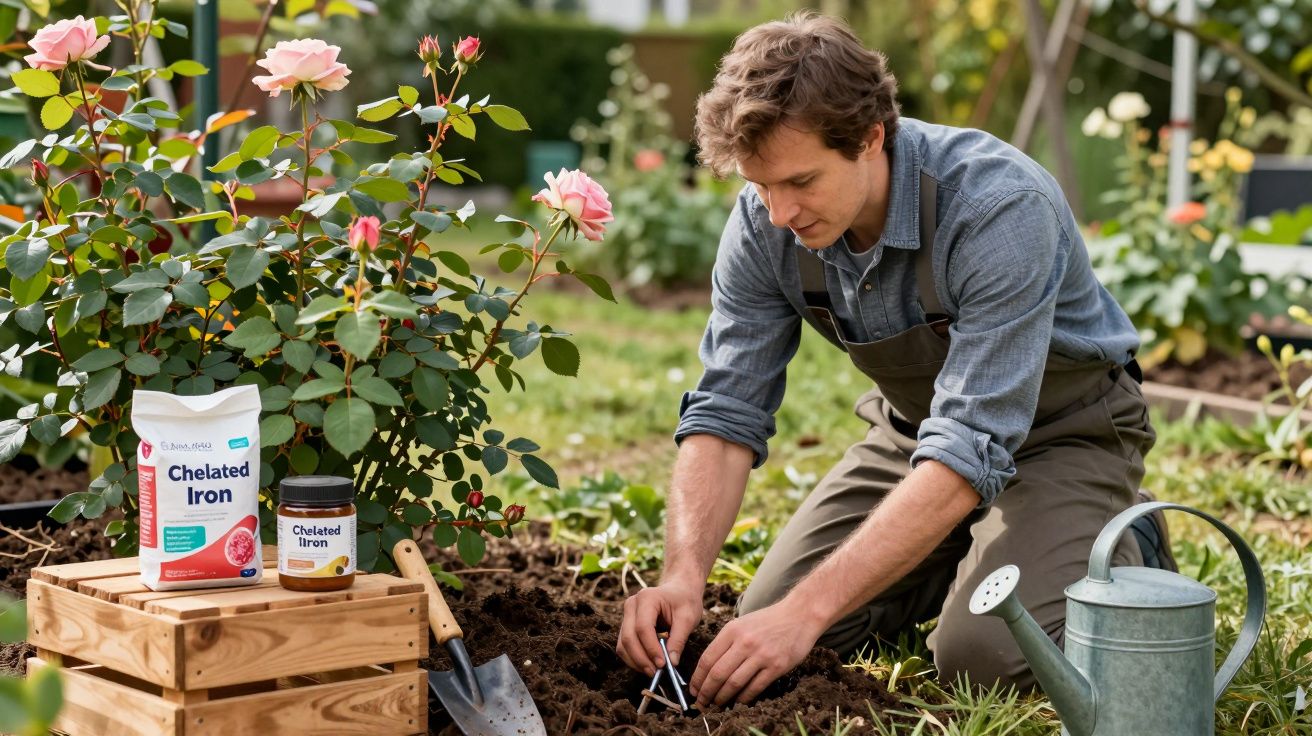
I was crouched under the climbing rose, knees in the mulch, staring at leaves the colour of old highlighters. The blooms were still pretty, but the foliage had gone sickly yellow with dark green veins - classic “something’s wrong, but I’m not dying yet” energy.
My neighbour leaned over the fence with the confidence of someone who has definitely won prizes at the village show.
“Rusty nails,” she said. “Pop a handful in the soil. My gran swore by it. Greens them up a treat.”
That night I went down an internet rabbit hole. Forums, Facebook groups, earnest YouTube videos filmed next to improbably perfect roses - everyone seemed to have a story about how a few old nails had “fixed” their plants. Then I spoke to a soil scientist, who almost dropped their mug laughing.
So who’s right - the gardeners with decades of lived experience, or the people peering at soil under microscopes?
The answer sits, unglamorously, somewhere in the middle.
Why rusty nails keep turning up at the foot of roses
The logic sounds tidy enough. Rust is iron oxide. Iron makes leaves green. Roses like iron. Therefore: give your rose some rusty iron and it should perk up. A folk remedy with a bit of chemistry sprinkled on top.
Yellowing leaves with green veins (iron chlorosis) are fairly common in roses, especially in:
- limey, chalky or newly built gardens with alkaline soil,
- plants stuck in compacted ground where roots can’t breathe,
- pots that have been in the same compost for years.
You look it up, see “iron deficiency” mentioned, remember the coffee tin of bent nails in the shed, and the hack practically writes itself.
There’s also the comfort of doing something visible. Slipping a few nails into the soil feels more intentional than just watering or feeding. It looks like a treatment, not just maintenance. When the plant improves later, the nails get the credit - even if they never actually dissolved enough to change anything.
And, to be fair, gardeners have been burying bits of metal for centuries. Old books recommend iron filings, broken tools, even crushed tin cans for “sturdy growth”. The rusty nail is just the modern, tidier version of a very old habit.
What the soil scientists see that we don’t
Here’s the bit that makes the researchers roll their eyes: rusty nails are mostly the least useful form of iron you could offer a plant.
Rust is iron oxide - chemically stable, stubborn and, in most garden soils, barely soluble. Plants need iron in a dissolved, available form near their roots. Think of it less like chunks of metal and more like a pinch of mineral in the water film around each grain of soil.
A few key points, stripped of the lab jargon:
Soil pH is the bouncer at the door.
In neutral to alkaline soils (pH 7 and above), iron loves to lock itself up as insoluble oxides and hydroxides. You could throw a whole toolbox into chalky ground and the rose still wouldn’t be able to drink more than trace amounts.Rust dissolves slowly. Very slowly.
Even in more acidic, organic-rich soils where some rust can dissolve, we’re talking months to years, not days. A gardener sees yellow leaves on Monday and greener ones by the end of the month and assumes cause and effect. A soil scientist sees seasonal changes, new feeding habits and root recovery.The limiting factor usually isn’t iron quantity.
Most garden soils already contain plenty of iron. The problem is that the plant can’t access it because:- the soil is too alkaline,
- roots are waterlogged or damaged,
- other nutrients are out of balance.
“From a chemistry perspective, rusty nails are basically ornamental,” a soil scientist told me. “They’ll eventually vanish into the background iron pool, but they won’t solve a serious deficiency at the speed gardeners imagine.”
In other words: if the soil conditions are wrong, the nails are like putting a closed tin of paint next to a bare wall. The colour exists, but it’s not going anywhere useful.
When the rusty nail trick might ‘work’ (but not for the reason you think)
So why do some gardeners genuinely see an improvement after burying nails?
Three things often happen at the same time:
They disturb the soil around the roots.
Inserting nails usually means loosening compacted soil a little. That alone improves air flow, drainage and root health - all of which help a struggling rose green up.They start paying more attention overall.
Once you’ve tried a “remedy”, you’re more likely to:- water more regularly (but not drown the plant),
- add a bit of compost or mulch,
- maybe throw on a balanced rose feed.
The rose responds to all that extra care, and the nails bask in undeserved glory.
In acidic, lively soils, there can be a tiny iron boost.
In a pot or bed with:- slightly acidic soil (pH around 6),
- plenty of organic matter and microbes,
- good moisture but not waterlogging,
rust will dissolve slowly into the surrounding soil solution. Over a season or two, a dense sprinkle of very small, rusty fragments (think filings or steel wool, not big nails) might add a bit of available iron right where new feeder roots are.
So yes, there are narrow situations where metal in the soil coincides with healthier foliage. But even then, it’s a slow, minor nudge, not a miracle cure.
If your rose perks up dramatically within a fortnight of your nail experiment, something else probably changed in its favour.
When it absolutely won’t help – and what to do instead
There are times when you could empty a hardware store under your roses and they’d still sulk. Yellow leaves on roses can have multiple, overlapping causes.
Common scenarios where rusty nails will do nothing useful:
Alkaline or chalky soil (very common in the UK).
If you can see chalk in the subsoil or your kettle furs up in days, your garden likely runs alkaline. Iron in such soils is chemically locked away. More iron doesn’t fix that lock; lowering pH and improving soil structure do.Overwatering and poor drainage.
Soggy roots can’t breathe. Plants under oxygen stress often show yellowing, even though the soil is technically nutrient-rich. The fix:- improve drainage,
- water less often but more deeply,
- raise the planting area slightly if necessary.
Straightforward hunger.
A rose that hasn’t seen proper feed for years may simply lack nitrogen or magnesium, which also cause yellowing. Balanced rose fertiliser and a top-up of compost usually make more difference than any amount of scrap metal.Cold snaps and root disturbance.
Early-season yellowing often follows late frosts or root damage from digging. Time, warmth and gentle watering fix this. Nails won’t speed up healing tissue.
Better, evidence-backed ways to help a rose with yellow leaves:
Check and adjust soil pH.
Use a simple test kit:- If your soil is very alkaline, add organic matter regularly and avoid lime-based products.
- In pots, repot into fresh, slightly acidic, peat-free compost.
Feed little and often.
A rose-specific fertiliser, applied as directed through the growing season, covers nitrogen, potassium, magnesium and micronutrients in the right balance.Use chelated iron if iron chlorosis is confirmed.
Products labelled “sequestered iron” or “chelated iron” hold iron in a plant-available form, even in slightly alkaline conditions. They act far faster than rusty nails ever could.Mulch and water properly.
A 5–7 cm layer of composted bark or garden compost keeps moisture steady and feeds soil life. Deep, infrequent watering trains roots to explore wider, cooler layers.
If this sounds boring compared with the romance of “feeding roses with old nails”, that’s because it is. It’s also what consistently works.
Myth versus reality at a glance
| Claim about rusty nails | What actually happens | What to do instead |
|---|---|---|
| “They quickly fix yellow leaves.” | Rust dissolves slowly; most improvement comes from other care changes. | Use chelated iron or balanced feed for faster, reliable results. |
| “Roses need extra iron from metal.” | Most soils already contain plenty of iron; availability is the issue. | Improve pH, drainage and organic matter so roots can access existing iron. |
| “It’s an old-fashioned cure, so it must be safe and effective.” | It’s mostly harmless, but effect is tiny and unpredictable. | Treat nails as scrap; focus on proven soil and plant care. |
A simple way to reality‑check it in your own garden
If you’re curious rather than convinced, you can run your own very small “trial” without a lab coat.
Pick three similar roses suffering from mild yellowing:
Plant A: the rusty nail treatment
- Loosen the soil gently.
- Bury a modest handful of old, rusty nails 10–15 cm from the stem, a few centimetres down.
- Water as normal, but change nothing else.
Plant B: the science‑backed treatment
- Loosen the soil the same way.
- Apply a rose fertiliser plus a chelated iron product as directed.
- Water as normal.
Plant C: the control
- Loosen the soil only.
- No nails, no extra feed.
Over the next six to eight weeks, note:
- which plant greens up fastest,
- whether new leaves look healthier than old ones,
- how flower production compares.
In most gardens, Plant B wins comfortably. Plant C often improves a little from the simple act of loosening soil. Plant A usually sits somewhere between B and C - not a disaster, but not the magic the stories promised.
Seeing that difference with your own eyes tends to do more than any article (including this one) to gently retire the nail trick to the “fun myths” drawer.
What I actually do with rusty nails now
After talking to soil scientists and watching my own roses for a few seasons, I stopped feeding them hardware.
These days I:
- recycle metal where possible, rather than burying it,
- add compost and mulch around roses twice a year,
- check pH before planting new ones, especially on new-build plots,
- keep chelated iron in the shed for the rare case of genuine iron chlorosis.
If I find the odd rusty nail in the garden, I fish it out. Left in the wrong spot, it’s more likely to puncture a tyre, nick a hand or end up in the compost shredder than to transform plant health.
None of this has the folklore charm of “secret nails for stronger roses”. But the bushes don’t know they’re missing a myth. They just respond to air around their roots, steady water, and the right nutrients in a form they can actually use.
The gardeners weren’t entirely wrong: roses do care about iron. The soil scientists aren’t being killjoys: rusty nails are, at best, a rounding error in that story.
If you love the ritual, you can keep burying a token nail or two for luck. Just don’t expect them to do the heavy lifting your soil and good habits are already doing behind the scenes.
Key points for busy gardeners
| Key point | Detail | Why it matters |
|---|---|---|
| Rusty nails are slow and mostly insoluble | In typical garden soils, they release usable iron very slowly, if at all | You won’t fix sudden yellowing by burying a few nails |
| Soil conditions beat metal scraps | pH, drainage and organic matter control iron availability | Adjusting these helps far more than adding extra iron |
| Use modern products for real deficiencies | Chelated iron and balanced rose feeds act quickly and predictably | Healthier foliage and flowers with less guesswork |
FAQ:
- Will rusty nails harm my roses or soil?
In normal amounts, no. They’re mostly inert and break down very slowly. The bigger risk is physical - stepping on them, hitting them with tools - rather than chemical harm to plants.- Is steel wool better than big nails?
Steel wool has more surface area, so it rusts faster and can release iron a bit more quickly. It’s still a slow, minor source compared with chelated iron, and can create messy tangles in soil or compost.- Can I use rusty nails in pots?
You can, but limited volume, regular watering and fresh compost mean pots respond much better to proper fertiliser and, if needed, a tiny dose of chelated iron. Nails take up space without offering much in return.- How do I know if my rose really has iron deficiency?
Look for young leaves turning yellow while the veins stay green, often starting at the top of the plant. Older leaves staying greener is a clue. A soil test showing high pH strengthens the case; a general pale plant often points to basic hunger or water stress instead.- If I stop using nails, what’s the one thing I should do first?
Loosen the soil gently around the dripline, add a 5–7 cm layer of compost or well‑rotted manure as mulch, and water deeply. That single combination of air, organic matter and moisture will do far more for your roses than any rusty hardware.


Comments
No comments yet. Be the first to comment!
Leave a Comment