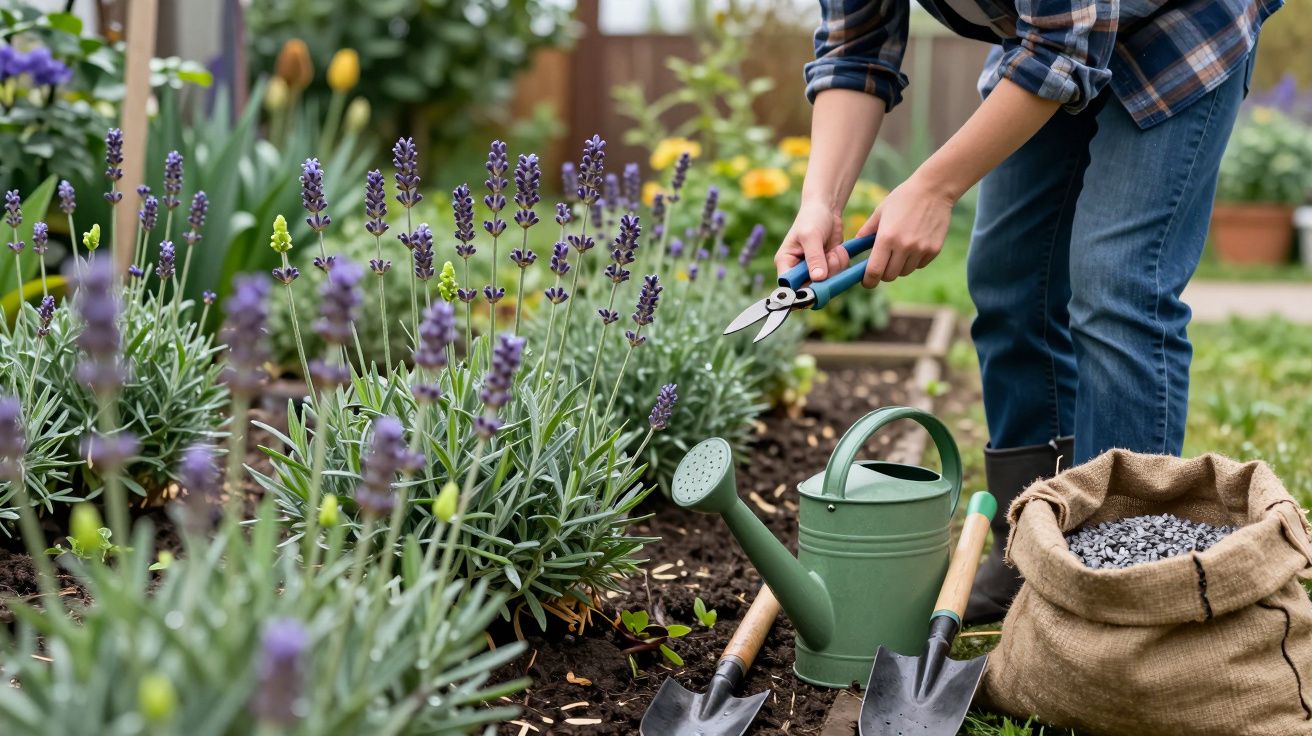
Lavender looks indestructible in July, then suddenly sulks in February: split stems, blackened tips, whole plants collapsing at the base. Many gardeners blame “a harsh winter”, but the trigger is often set months earlier with one well‑meant tidy-up.
The trap is timing. Prune at the wrong point in the year and you push lavender into making soft new growth just as light levels drop and cold, wet weather moves in. That tender growth can’t harden off properly, and the plant goes into winter with vulnerable tips and stressed stems.
What to do instead is surprisingly simple: leave the proper cut until spring, then prune with a lighter hand than most people think.
The one pruning timing mistake that leads to winter die‑back
The mistake experts see again and again is cutting lavender back in autumn (often September to November), especially after a late flush of flowers. It looks neat for a week, then winter arrives and the plant pays for it.
Autumn pruning can cause two problems at once. First, it encourages fresh shoots that get scorched by frost and wind. Second, it leaves lots of exposed cut ends that sit in cold damp for months, which raises the risk of rot working down into the woody framework.
Lavender doesn’t usually die because it’s cold. It dies because it’s cold and wet while trying to heal a cut.
Why lavender reacts so badly to “late” pruning
Lavender is a Mediterranean shrub that wants two things in winter: dry roots and a stable, woody structure. When you prune late in the season, you interrupt both.
Soft growth is a frost magnet
After a cut, lavender often responds with new, leafy shoots. In spring and early summer that’s helpful. In autumn it’s a liability: the shoots stay soft, then a cold snap turns the tips black and the plant wastes energy trying to repair damage when it should be resting.
Open cuts invite winter wet
In many UK gardens, winter isn’t consistently freezing-it’s damp. Water sits in the crown, cut surfaces stay wet, and fungi take the opportunity. Die‑back often starts where a pruned stem meets older wood, then creeps down.
Cutting too hard makes it worse
Timing is the headline, but severity is the accomplice. If you prune into old, brown wood late in the year, lavender may not reshoot at all, leaving dead stubs that channel moisture into the centre.
The safer month to prune instead (and what to do in late summer)
For most UK gardens, the safer “main prune” month is April. By then, the worst of winter wet and hard frosts has usually passed, and you can see exactly what survived.
That doesn’t mean you do nothing the rest of the year. Think of lavender as a two‑stage routine:
- Late summer (often August): a light tidy after flowering to stop it flopping and setting too much seed.
- Spring (April): the main prune to shape the plant and stimulate healthy new growth.
If you garden in a colder pocket (or you’re on high ground), push the main prune later into April. If you’re in a mild coastal spot, late March can work-but April is the safer default.
A simple rule that prevents 90% of pruning mistakes
If you only remember one thing, make it this:
- In autumn: deadhead and snip spent flower stems if needed, but avoid a proper cut-back.
- In April: prune for shape, leaving a cushion of green on every stem.
Lavender needs foliage to bounce back. A good cut should leave the plant looking like a compact dome, not a bundle of sticks.
How to prune lavender in April (quick, repeatable method)
Choose a dry day so cuts aren’t sitting wet. Then work in three passes rather than hacking at it once.
- Remove obvious winter damage first. Snip off blackened or brittle tips back to healthy green.
- Reduce this year’s growth by around one third. Aim for an even shape, like a low mound.
- Stop before you hit bare, brown wood. If there’s no green showing on a stem, don’t cut into it-many lavenders won’t reshoot from old wood.
A pair of sharp secateurs is better than shears for small plants because you can see what you’re cutting. For big, established domes, shears can be fine as long as you’re not shaving into the woody core.
What “late pruning” looks like in real gardens
These are the scenarios that most often end in winter die‑back:
- A September haircut after a second bloom. The plant responds with a flush of soft shoots, then November turns wet and cold.
- A tidy in October “before winter”. It feels logical, but it leaves fresh cuts and less leaf cover to protect the crown.
- Hard pruning after flowering, but too late in the season. The same cut that’s safe in August becomes risky in late September.
If you’re unsure where your garden sits, use a simple cue: when nights start to feel cold and growth slows, stop cutting.
A quick timing guide (UK‑friendly)
| Month | What to do | What to avoid |
|---|---|---|
| August | Light trim after flowering, remove spent stems | Cutting into brown wood |
| September–March | Leave structure alone, only remove broken bits | Proper cut-backs and reshaping |
| April | Main prune for shape, reduce by ~1/3 | “Balding” the plant to bare sticks |
If you already pruned in autumn: how to reduce the damage
You can’t rewind, but you can stop making it worse. The goal is to keep the crown dry and avoid more stress.
- Don’t prune again in winter. Let it be; more cuts mean more entry points for rot.
- Check drainage, not feed. Lavender rarely needs fertiliser, but it often needs sharper drainage.
- Clear soggy mulch away from the base. Mulch can trap moisture around the crown; lavender prefers air and grit.
- In pots, lift them off the ground. Pot feet or bricks prevent the container sitting in a cold puddle.
In April, prune only what’s clearly alive. If parts are dead, remove them back to a healthy junction. If the whole plant is woody with only a few green tufts, it may be better to replace it and adjust your pruning routine going forward.
Winter survival isn’t just pruning: two conditions that matter more than cold
Lavender copes with low temperatures far better than it copes with a wet winter.
1) Drainage at the crown
If your lavender sits in heavy soil, consider working grit into the top layer around the plant, or planting on a slight mound. The aim is to keep water from pooling where stems meet roots.
2) Light and airflow
Lavender hates being smothered. Avoid crowding it with floppy perennials that collapse onto it in autumn, and don’t tuck it into a dark, windless corner where damp lingers.
English vs French lavender: a small but useful distinction
Not all lavenders overwinter the same way. English lavender (Lavandula angustifolia) is typically the hardiest in UK gardens. French/Spanish types (often Lavandula stoechas) are more likely to resent wet and cold, even with perfect pruning.
If you’re growing the less hardy types, the “don’t prune in autumn” rule matters even more, and pot-growing (with winter shelter from relentless rain) can be the difference between a plant that lasts and one that collapses.
FAQ:
- Should I deadhead lavender in autumn? Yes-snipping off spent flower stems is fine. Avoid a full cut-back or reshaping once autumn weather settles in.
- Can I prune lavender in March instead of April? In mild areas, sometimes. If you regularly get late frosts or your soil stays cold and wet, April is the safer month.
- What happens if I cut into old wood? Many lavenders won’t reshoot from bare, brown stems. You can end up with permanent gaps or a plant that fails altogether.
- My lavender is woody and split in the middle-can it be saved? Sometimes. In April, remove dead sections back to healthy growth and improve drainage. If there’s very little green left, replacement is often the cleaner fix.
- Do I need to cover lavender for winter? Usually not. In the UK, keeping it dry (free-draining soil, no soggy mulch at the crown) matters more than wrapping it up.






Comments
No comments yet. Be the first to comment!
Leave a Comment