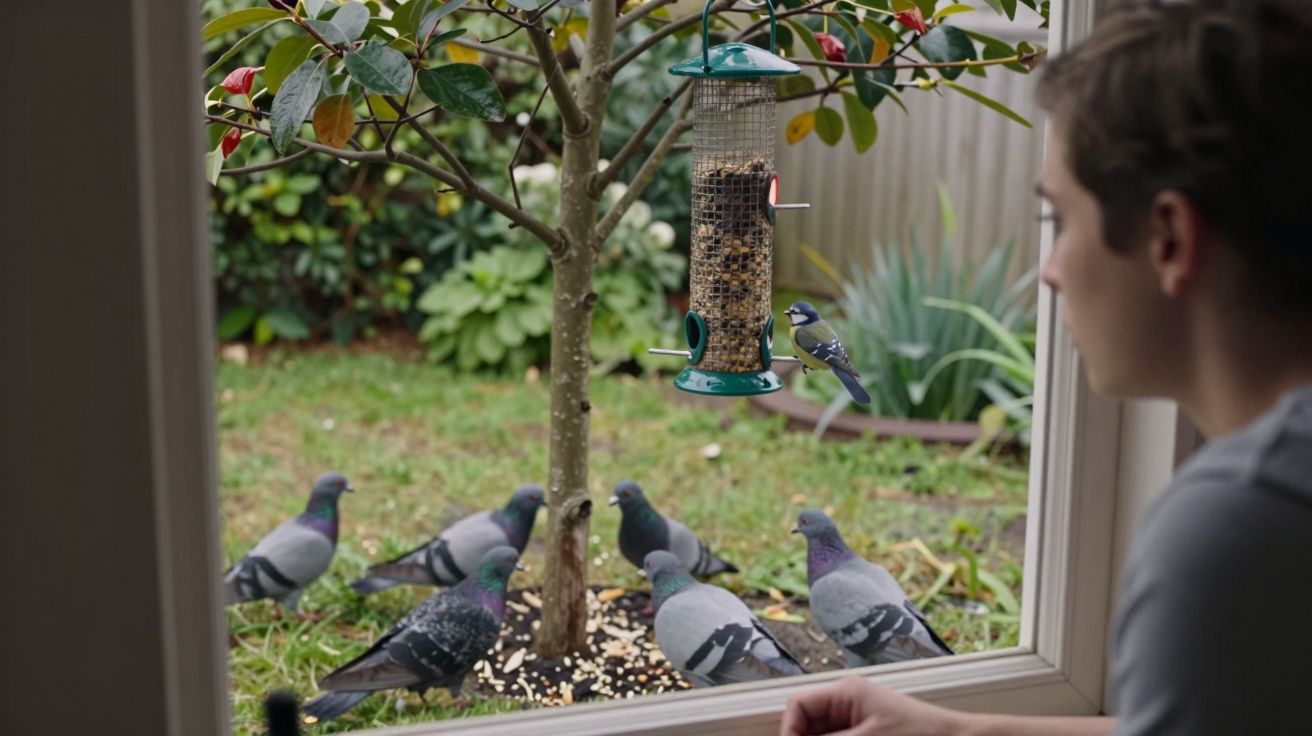
The first thing you notice is the quiet. No scrabble of claws on the feeder pole, no soft tick of seed against plastic, no indignant robin shouldering in. The feeder still hangs there, full, looking like you’ve done your bit. But the seed level hasn’t dropped in days. The garden soundtrack has gone thin.
You stand at the window a little longer than usual. A blue tit lands, cocks its head, and starts flicking seed out like a tiny, irritated chef. A goldfinch arrives, tries twice, then leaves. Pigeons waddle in to hoover up the mess. It feels personal, somehow, like you’ve cooked a meal and everyone’s just pushing it round the plate.
Here’s the uncomfortable truth most packaging won’t tell you. The problem usually isn’t that “there are no birds any more” or that they’ve mysteriously fallen out of love with your garden. It’s that your feeder is serving the wrong menu - and the birds have quietly sacked your café.
How your feeder looks to a bird
From your side of the glass, a seed mix is a bag of good intentions. From a bird’s point of view, it’s energy maths. Every hop, every wingbeat, is fuel spent. A feeder has to pay that back with interest, quickly, or it’s not worth the risk.
Small garden birds have brutal daily budgets. A blue tit in winter may lose a third of its body weight overnight. Every visit to your feeder is a trade-off: calories versus danger. Open air means sparrowhawks. Time on a perch means less time watching for cats. They can’t afford a disappointing lunch.
Birds don’t see a “mix”. They see individual grains and fragments, sorted at high speed with beaks evolved for particular jobs. Finches are built for small oily seeds. Tits like soft, high-fat kernels. Robins and dunnocks go for insects and smaller, softer bits. If eight out of ten mouthfuls are wrong, they’ll simply stop coming.
That’s what “vanishing” often looks like up close. It’s not drama. It’s quiet re-routing. They still exist; they’ve just found a better buffet two gardens over.
The quiet culprit: filler grains that nobody asked for
Take a hard look at the fine print on a bargain “wild bird mix” and you’ll often see it: wheat, flaked maize, barley, split peas, coloured bits that look like sweets. It’s cheap, it bulks out the bag, and it pleases pigeons and rats more than the birds you’re hoping to help.
Cheap mixes are built for price, not for birds. The species most people want to see at UK feeders - tits, finches, house sparrows, robins, nuthatches - either don’t like big cereal grains or physically struggle with them. They land, rummage for the few sunflower hearts or peanuts hidden inside, and chuck the rest overboard.
To you, that looks like frantic feeding. Seed flying everywhere! The feeder must be popular. In reality, you’re watching a rejection line in action. The good bits go fast, the filler stays. Day by day, the balance tips from “worth a visit” to “don’t bother”.
There’s a second problem: all that discarded grain on the ground. It soaks up damp, goes mouldy, and starts to smell wrong to sensitive beaks. It also invites rats and feral pigeons, which make nervous small birds even jumpier. A feeder that feels risky and smells stale soon drops off the local flight path.
How to choose a seed mix birds actually want
You don’t need a degree in ornithology. You just need to shop like a suspicious robin: ignore the front, read the small print, and favour simple, oily foods over anonymous bulk.
Look for mixes where the first ingredients are things like:
- Sunflower hearts or black sunflower seeds
- Kibbled (chopped) peanuts
- Oats and small, soft cereals
- Dried insects or mealworms in smaller quantities
Be wary when you see:
- “Cereals” or “cereal by-products” without detail
- Whole wheat, barley or large maize flakes high on the list
- Lentils, split peas, rice, or lots of coloured bits
In practical terms, that means:
- Prioritise sunflower hearts. They’re the closest thing to universal currency at a UK feeder: high in fat and protein, easy to eat, adored by tits, finches and sparrows.
- Offer specialist feeds where you can. A nyjer feeder for goldfinches, fat balls (without plastic nets) for tits, and a tray with soaked mealworms for robins can transform who shows up.
- Buy smaller bags more often. Fresh seed smells clean and slightly nutty. Old seed goes dusty and dull. A bag that lasts you all year is a bag that’s stale for most of it.
- Keep at least one feeder “busy”. Birds are suspicious of food that appears and never seems to go down. Fill less, more often, so they learn that your garden delivers.
If you’ve accidentally been running a pigeon canteen for months, don’t panic. Finish the old mix by scattering tiny amounts on a distant patch for ground-feeders, then change the main feeder to a better recipe. The birds will test it. Those first approving visits are your review scores going up.
Using freshness and layout to rebuild trust
Seed quality is half the story. How and where you offer it shapes whether nervous birds feel safe enough to stay more than a heartbeat.
Start by cleaning. A quick scrub with hot water and a mild disinfectant (or a specialist bird-safe cleaner) once a fortnight in colder months, weekly in summer, prevents the invisible build-up of moulds and droppings that put birds off long before you smell anything. Let everything dry fully before refilling; damp seed clumps and spoils faster.
Then think about perches and cover. Birds like a clear escape route and a nearby lookout. A feeder hung a metre or so from a dense shrub or small tree is ideal: close enough for a dash to safety, far enough that cats can’t launch straight from the branches. If your feeder dangles in the open like a lonely bauble, it may feel too exposed, no matter how good the menu is.
Finally, reset expectations gently:
- Switch to a high-quality mix or pure sunflower hearts.
- Put out modest amounts twice a day rather than one big fill.
- Clear the old spilt seed and any slimy remnants underneath.
- Give it a week or two. Birds map food sources over days, not minutes.
Once birds believe your feeder is worth the risk again, word spreads fast along the hedge. You’ll often see one species return first - blue tits are great early adopters - with others following once the “reviews” are in.
The small shift that brings the birds back
The mistake that drives birds away is rarely malice. It’s usually tidy, thrifty, well-meant: a big bag of “all-purpose” mix by the back door, topped up when you remember, left out through rain and shine. On the shelf, it feels generous. In a bird’s beak, it feels like hard work.
Changing that isn’t about spending a fortune or turning your garden into a nature reserve. It’s about swapping bulk for quality, clutter for freshness, and guessing for watching. Five minutes at the window with a mug in your hand, noticing what gets eaten first and what always ends up on the grass, will tell you more than any label claim.
Think of your feeder less as decoration and more as a tiny, life-or-death café. The customers are fussy for good reason. When you meet them halfway - better seed, cleaner kit, safer perches - the silence lifts. The garden fills again with wings and argument and seed-shell rain. And you can say, quietly, that you helped.
| Key point | Detail | Why it matters |
|---|---|---|
| Birds are energy accountants | They won’t waste time on low-reward, risky food sources | Explains why they “vanish” from poor-quality feeders |
| Filler grains drive them away | Cheap mixes pack in wheat and maize most small birds don’t want | You see mess and silence instead of steady feeding |
| Quality beats quantity | Sunflower hearts, clean feeders, modest fresh fills work best | Small changes restore trust and bring birds back |
FAQ:
- Why do birds throw so much seed on the ground? They’re usually sifting for the few high-energy bits they actually want, ejecting filler grains they can’t or won’t eat. That mess is a sign the mix isn’t well suited to them.
- Have “my” birds gone for good if they stop visiting? Not usually. They’re likely feeding elsewhere. Improving seed quality and freshness, and keeping feeders clean, often brings them back within a couple of weeks.
- Is it bad to keep using up an old cheap mix? In large quantities, yes. It encourages rats and pigeons and can go mouldy. If you want to finish it, scatter tiny amounts in a separate area for ground-feeders while upgrading the main feeder.
- Are straight foods better than mixes? Often, yes. Pure sunflower hearts, nyjer, or peanuts in species-appropriate feeders make it clear who the food is for and avoid cheap bulk ingredients. You can still use a good-quality general mix alongside them.
- How often should I clean my feeders? Aim for every 1–2 weeks, and always after periods of heavy use or rain. Clean feeders keep food appealing and help prevent disease spreading through your local bird community.

Comments
No comments yet. Be the first to comment!
Leave a Comment