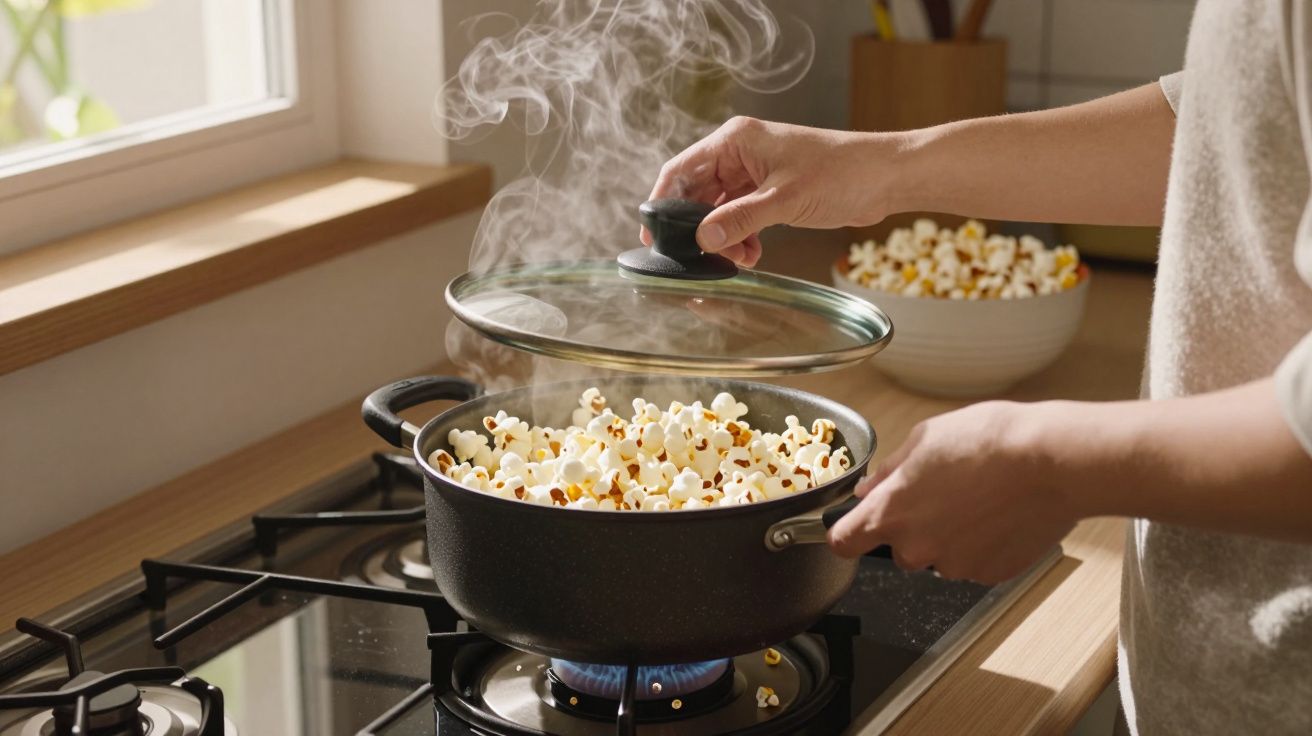
Across British kitchens, something gently rattling on the hob is replacing the familiar whirr and ping of the microwave. People who once swore by instant popcorn are quietly going back to an old‑fashioned method: a simple pan, a splash of oil and a lid that dances when the kernels start to go.
Part of it is cost and clutter – a bag of kernels lasts weeks, doesn’t hog cupboard space and skips the single‑use packaging. Part of it is taste. Pan‑popped corn comes out hot, crisp and properly fluffy, without the slightly stale edge many microwave bags carry if they sit a second too long.
There is also the oil question. A standard microwave bag arrives pre‑loaded with fat and flavourings you don’t control. On the hob, you can use barely a teaspoon of oil for a generous bowl and still get that “cinema fresh” aroma, only without the greasy fingers or heavy butter fog.
The method sounds retro, but it suits modern habits: quick, cheap, easily customisable and surprisingly low‑mess once you know a few small tricks.
Why the pan is making a quiet comeback
Popcorn itself is not the villain. It’s a whole grain, naturally high in fibre and low in fat until we drown it in butter or syrup. The problem with many ready‑to‑pop bags is what they add: palm oils, artificial butter flavours, excess salt and sugar, plus the cost of all that packaging.
With loose kernels, you buy just one ingredient and make everything else yourself. You can keep salt modest, swap heavy fats for small amounts of better oils, and season after popping so nothing tastes burnt. It turns popcorn from a guilty habit into something closer to a clever weeknight snack.
There is a practical side too. Microwave bags are locked to one portion size and one flavour profile. A pan lets you make a small bowl for one, a big sharing heap for film night, half savoury and half sweet – all from the same base.
The pan method gives you three levers: heat, oil and timing. Once those are in hand, you get consistent pops and very few “old maids” at the bottom of the bowl.
How the old‑fashioned method works
Heat, steam and the “pop”
Each kernel of popcorn hides a tiny reserve of water inside a hard shell. When heated, that water turns to steam and builds pressure. At around 180–190°C, the shell can’t hold any more, it bursts, and the starch inside expands into the fluffy shape we recognise.
Oil plays a supporting role. A thin film helps transfer heat evenly, so kernels reach popping temperature at roughly the same time. Too much oil makes popcorn heavy; too little and you risk scorching spots on the pan before all the corn has popped.
Choosing your pan and ratios
For most hobs, a medium‑sized, heavy‑bottomed pan with a tight lid works best. The base spreads heat evenly, and the lid traps steam just long enough to cook the kernels without turning them soggy. A glass lid is handy if you have one, but not essential.
A good starting ratio is:
- 1 tablespoon neutral oil (such as rapeseed or sunflower)
- 60–80 g popcorn kernels (about ⅓–½ cup)
This makes a generous bowl for two or a snack for three. You can scale up or down as long as you keep kernels in a single layer across the pan base.
Step‑by‑step: cinema‑fresh popcorn on the hob
Pre‑heat the oil.
Put the pan on medium heat with the oil and three kernels. Fit the lid. When those three pop, you know the oil is ready.Add the rest of the kernels.
Take the pan off the heat for 20–30 seconds, pour in the remaining kernels, swirl to coat them in oil, then put the pan back on the hob and replace the lid. This short off‑heat pause helps the kernels warm more evenly.Let the popping build.
Keep the heat at medium. Within a minute or so, you will hear a rapid rattle. Gently shake the pan every 10–15 seconds, sliding it back and forth over the burner to stop any sticking. Hold the lid firmly as you do.Listen for the slowdown.
When the pops slow to about one or two per second, turn the heat off but leave the pan on the hob for 10–15 seconds more. Stragglers will finish without burning the already‑popped corn.Vent and tip.
Crack the lid away from your face to release steam, then pour the popcorn into a large bowl straight away. Season while it’s hot so flavours cling well.
Never leave the pan unattended during popping. The process is quick – usually under five minutes – and those last 30 seconds are the difference between golden and scorched.
Oil, cost and flavour: how it compares
Because you control the fat, pan‑popped corn can be noticeably lighter than many microwave versions. You only need enough oil to create a thin film in contact with each kernel; excess simply pools at the bottom and soaks the finished popcorn.
Buying kernels in bulk also reduces cost per portion and packaging waste. A single 500 g bag of popping corn often makes the equivalent of 8–10 microwave packs for a fraction of the price.
| Method | Approx. oil per serving* | Flavour control |
|---|---|---|
| Microwave bag | Pre‑loaded (often 2–3 tbsp) | Fixed; hard to adjust salt or fat |
| Hob, pan method | About 1 tbsp (or less) | Full control; season after popping |
| Hot air popper | None added in machine | Very light; add fat only if wanted |
*Based on a generous bowl for 1–2 people.
For those who like a richer “cinema” feel, you can drizzle a little melted butter or flavoured oil over the hot popcorn in the bowl. Because you’re starting with less fat in the pan, you can taste indulgent without tipping into greasy.
Seasoning ideas that don’t taste like a packet
Microwave bags often rely on artificial “butter” aromas. With the pan method, you can build cleaner flavours using things you already have. The key is to keep seasonings fine enough to cling and to add them while the popcorn is still warm.
Simple savoury
- Fine salt and a small knob of melted butter or olive oil
- Smoked paprika and sea salt
- Nutritional yeast, garlic granules and a pinch of chilli powder for a “cheesy” kick
Subtle sweet
- Icing sugar and a pinch of cinnamon
- Drizzle of honey or maple syrup plus a dusting of cocoa powder (toss quickly to avoid clumps)
- Vanilla sugar and a touch of fine sea salt for a “salted caramel‑adjacent” feel without the heavy sauce
For stronger flavours, toss popcorn in a large bowl, not in the pan. This avoids burning any sugar or spice left against the hot metal and keeps the texture crisp.
Troubleshooting and pro tips
Lots of unpopped kernels
If you end up with a heap of “old maids”, the heat was either too low or too uneven. Increase the heat slightly next time and make sure kernels sit in a single layer. Very old or poor‑quality kernels also pop less reliably because they have lost moisture.
Storing popping corn in an airtight jar in a cool cupboard helps keep that internal moisture stable. If a bag has been open for months, expect a lower pop rate regardless of technique.
Scorched or chewy popcorn
Burnt notes usually come from heat set too high or from leaving the pan on the hob long after popping slows. Follow the “one to two pops per second, then off” rule, and don’t be tempted to chase the very last kernel. A few unpopped is better than a whole batch with a bitter edge.
Chewy popcorn comes from trapped steam. As soon as the popping finishes, crack the lid to vent, then transfer everything to a bowl rather than leaving it to sweat in the pan.
Think of the lid as a temporary greenhouse: useful to build steam, unhelpful if you leave the plants in all day. Vent quickly for maximum crunch.
Keeping the smell pleasant, not overpowering
Hob‑popped corn smells naturally toasty, but if you are making several batches or live in a small flat, the aroma can build. Opening a window opposite the hob and running your extractor from the moment you add oil helps sweep away excess vapour.
If the air feels heavy afterwards, a small pot of water brought to the boil with a few strips of lemon peel does double duty: the steam helps lift fine fat particles from the air, and the citrus scent gently resets the room.
Building a quiet cinema ritual at home
Once you’ve done it a few times, the pan method becomes muscle memory. Oil, test kernels, listen for the first pop, then that familiar crescendo. You can easily prepare a bowl in the time it takes a streaming service to load a trailer, without tearing open a crinkly bag.
Treat it as a tiny ritual: pick your kernels, choose tonight’s seasoning, put the lid on and wait for the first rattles. You get the same warm, “cinema fresh” crunch, tailored to your taste, with less oil, less waste and no mystery butter haze hanging in the kitchen.
FAQ:
- Do I need a special popcorn pan? No. Any medium, heavy‑bottomed pan with a well‑fitting lid works. A wider base helps heat distribute more evenly, but you don’t need a dedicated gadget.
- Can I use olive oil? Standard olive oil is fine at medium heat. Avoid very low‑smoke‑point oils (like unrefined nut oils) for popping; save them for drizzling afterwards.
- Is the pan method safe on induction hobs? Yes, provided your pan is induction‑compatible. Keep the heat at a moderate setting and shake the pan gently to avoid scratching the surface.
- Can I make it completely oil‑free in a pan? Not reliably. Without any fat, kernels tend to scorch before they all pop. If you want totally oil‑free popcorn, a hot air popper is a better option.


Comments
No comments yet. Be the first to comment!
Leave a Comment