The first sign is never dramatic. The loo still flushes, but it hesitates - that little gulping pause like it’s thinking about it. Then the water sits a touch higher than usual, and the bathroom takes on a faint, sweet sewage whiff that air freshener can’t quite bully into submission.
You reach for the plunger, you do the optimistic jiggle, you tell yourself it’s just “one of those mornings”. But somewhere in the pipework, a soft rope has started to form: wipe fibres, toilet paper, a bit of fat, all snagging like lint in a tumble dryer filter. And the annoying part is how often it begins with a packet that says “flushable” in friendly blue letters.
A drain engineer I once spoke to put it bluntly: “Flushable just means it can go down. It doesn’t mean it should.”
The “flushable” label, and what drain specialists actually see
Toilets are designed for three things: pee, poo and paper. Not moisturised cloth. Not “biodegradable fibres”. Not anything that behaves like fabric when it’s wet and twisted.
Most wipes don’t break apart like toilet paper does. Paper is made to lose strength fast in water; wipes are made to stay strong long enough to clean. That’s the whole point. In the pipe, that strength becomes a problem: they catch on rough joints, tree roots, scale, or the tiniest lip in older clay pipes.
It’s worse in homes with low-flow loos, long runs to the main sewer, or shared stacks in flats where the system relies on lots of water moving often. One wipe might pass. Ten over a week can braid together. Add a bit of cooking fat that’s cooled in the line, and you’ve basically made a net.
The call-out price is what makes it sting. A blocked loo at 9pm isn’t a gentle DIY learning experience; it’s often a £150–£200 “please just fix it” moment, sometimes more if they need to jet, rod, or lift an inspection cover.
The small habit that stops £200 problems: a bin by the loo
The fix isn’t glamorous. It’s not a clever chemical. It’s a setup.
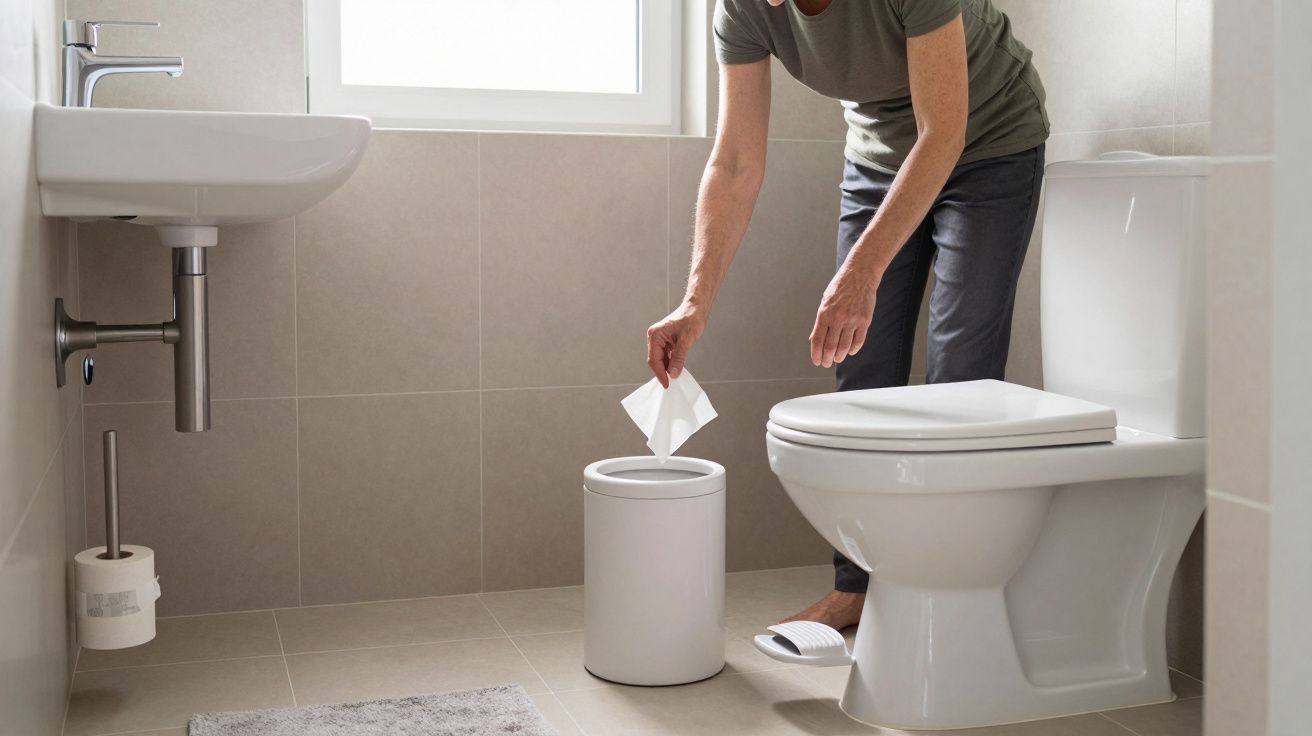
Put a lidded bin right next to the toilet, close enough that it feels easier than flushing. Line it. Make it part of the bathroom’s “normal”, like the loo brush. If you’ve got kids, guests, or anyone who’s used to wipes, that bin is the difference between one awkward conversation and a Sunday spent watching a plumber carry a wet bundle out of your drain.
The detail that matters is the lid. People will use a bin if it doesn’t look or smell like a bin. A pedal bin, in particular, turns it into a reflex: wipe, pedal, drop, done. No lingering guilt, no “I’ll just flush this one”.
If you want it to feel less grim, store a roll of small bin liners under the sink and change it little-and-often. It’s the same logic as keeping a vinegar jug by the door: make the right action the easy action.
How to set up the bin‑by‑the‑toilet method (so people actually use it)
You’re aiming for frictionless. Here’s the version that survives real life.
- Choose the right bin: 3–5 litres, lidded, ideally pedal-operated. Slimline if space is tight.
- Line it every time: a small liner stops “bin ick” and makes emptying a 10-second job.
- Place it where the hand naturally reaches: next to the loo, not across the room by the door.
- Add a cue: a discreet sign for guests (“Please bin wipes – thank you”) or a little basket of spare liners.
- Keep wipes out of sight if you can: a drawer or covered container reduces the “auto-flush” habit.
There are common snags. If the bin is too small, it overflows and everyone stops trusting it. If it has no lid, people avoid it. If it lives behind the toilet where you have to twist like a gymnast, it won’t get used when someone’s half-asleep.
And yes, the conversation can feel awkward. Make it neutral: “Our drains are old - please don’t flush wipes.” Most people are relieved to be told what the house rules are.
Already sluggish? What to do before it becomes a full blockage
If the flush is slow and you suspect wipes are involved, treat it gently. The goal is to avoid compacting a soft blockage into a hard one.
Start simple: use a proper toilet plunger (the one with a flange, not the discreeter sink one). Get a good seal and do steady plunges rather than frantic stabbing. Then stop and see if it improves; constant flushing can just pile more water and paper onto the wad.
Avoid pouring random “miracle” drain chemicals down the loo, especially if you’re on older pipework or a septic system. They rarely dissolve wipes, and they can make a later call-out messier and more dangerous for whoever has to handle it. Hot (not boiling) water with a squirt of washing-up liquid can sometimes help a fat-heavy line, but it won’t magically unbraid wipes.
If it’s backing up, gurgling in other drains, or affecting a neighbour in a block, that’s your cue to stop experimenting. That’s a system issue, not a “give it one more flush” situation.
“The cheapest drain job is the one you never book,” one engineer told me. “Bins by toilets sound silly until you’ve pulled a wipe rope out of a pipe at midnight.”
The calm rules that keep your pipes boring (in the best way)
Most homes don’t need a new sewer line. They need a few boring habits that don’t look like “maintenance”.
- Flush only the three Ps: pee, poo, paper.
- Bin everything else: wipes, cotton buds, sanitary products, floss, hair, kitchen roll.
- Never tip fat down the sink; let it cool and bin it.
- If you’ve got a macerator, be stricter - they hate wipes.
- If guests use your bathroom often, make the bin obvious and easy.
Small changes stack. A lidded bin next to the toilet is unglamorous, but it prevents the exact kind of phone call that ruins an evening: the one where you’re Googling “emergency plumber near me” with one hand and holding the bathroom door shut with the other.
| Point clé | Détail | Intérêt pour le lecteur |
|---|---|---|
| “Flushable” reality | Wipes stay strong; paper breaks down | Less risk of wipe “ropes” in the pipe |
| Bin-by-the-toilet setup | Small lidded, lined bin within reach | Easier than flushing; guests comply |
| Early action | Plunge properly; avoid harsh chemicals | Prevents a minor slow flush becoming a £200 call-out |
FAQ:
- Are any wipes genuinely safe to flush? In practice, drains specialists treat all wipes as bin-only. Even “flushable” ones can snag in real pipework, especially in older homes or shared stacks.
- What if I’m using wipes for medical reasons or mobility needs? Keep using what you need - just bin them. A lidded, lined pedal bin right by the loo makes it hygienic and low-effort.
- Will a “septic-safe” wipe be OK in a septic tank? “Septic-safe” is not a guarantee. Septic systems are even less forgiving; wipes can build up and increase maintenance costs. Bin them.
- Why does it block months later, not immediately? Wipes often pass at first, then start catching on a rough spot and building a mat over time. It’s a slow braid, not a single dramatic clog.
- What’s the quickest sign I should call a professional? If the loo backs up repeatedly, other drains start gurgling, or you’re in a flat and neighbours are affected, stop flushing and get it checked.

Comments
No comments yet. Be the first to comment!
Leave a Comment