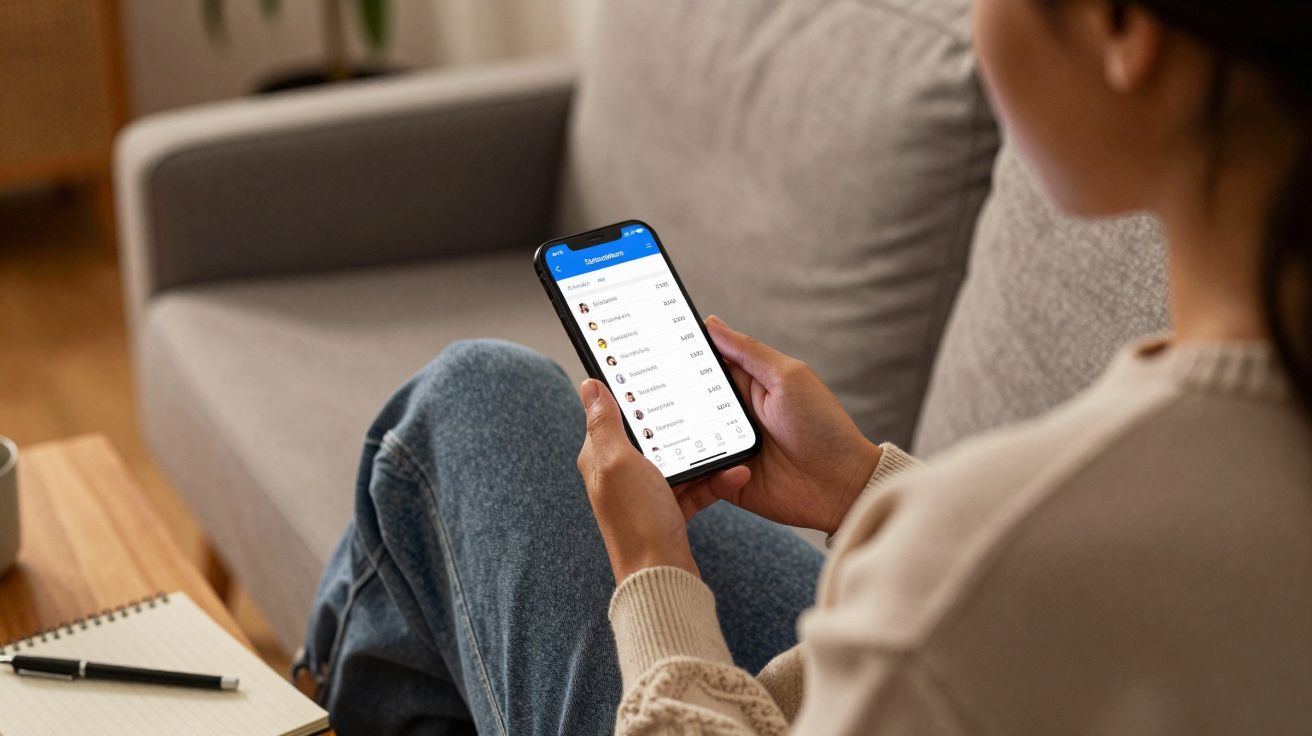
You don’t notice a direct debit the way you notice a price rise. There’s no push notification. No “are you sure?”. Just a quiet line in your banking app that keeps renewing itself, month after month, until it’s part of the scenery.
Then one day you scroll far enough back and feel that small, sharp jolt: £9.99 to something you barely recognise. £6.49 to a “premium” you definitely don’t use. A charity you meant to support for one month, still going. It’s not fraud. It’s forgetfulness with a standing order.
Consumer advisers say the fix isn’t a spreadsheet or a weekend of rage-cancelling. It’s a five‑minute audit, done inside the bank app you already have, built to catch “ghost subscriptions” before they quietly take another £100 a year.
The problem isn’t the £7.99 - it’s the invisibility
Subscriptions are designed to feel painless. The payment leaves your account in the background, on a date that rarely lines up with payday, and the name on the transaction can look nothing like the service you signed up for. Some firms bill through payment processors, some use trading names, some truncate until it’s basically a word puzzle.
Direct debits are also trusted by design. They’re meant to be safe and reversible when something goes wrong, so people glance at them less. And that’s where “ghosts” thrive: not hidden, just unexamined.
The aim of the audit isn’t to be perfect. It’s to surface anything that makes you pause, while you’re still within easy-cancellation territory and before a “small” monthly spend turns into a yearly leak.
The 5‑minute bank‑app audit: the exact clicks that catch ghosts
Most UK banking apps now have a section for managing recurring payments. Names vary - “Direct debits”, “Regular payments”, “Subscriptions”, “Manage payees” - but the path is usually consistent: Payments → Direct debits (or Scheduled payments) → Active.
Set a timer for five minutes. The goal is speed and honesty, not admin.
Step 1: Sort by amount, not alphabet (60 seconds)
Start with the highest monthly direct debits first, because they’re the fastest wins. If your app doesn’t sort, scan for anything above £10, then anything between £5–£10.
As you tap each one, look for two clues: the collection date and the merchant name. Unknown + recent payment date is your priority, because it means it’s likely to renew again soon.
Step 2: Flag anything you can’t explain in five seconds (90 seconds)
Advisers use a blunt rule: if you can’t explain the payment instantly, it gets flagged. Not cancelled, just flagged.
A quick list that often catches people out:
- Trial conversions (“free for 7 days”) that became paid.
- Old mobile SIMs, tablets, or watches you no longer use.
- Delivery memberships bundled into a retailer account.
- Donations you set up during a one-off appeal.
- “Duplicate” services (two cloud storages, two fitness apps, two antivirus plans).
Keep it simple: screenshot the direct debit list or write down three names that feel wrong. Three is enough to save real money.
Step 3: Tap into the transaction trail (60 seconds)
For each flagged direct debit, open the most recent payment and then view previous transactions with the same merchant. You’re looking for pattern and longevity:
- If it’s only happened once, it might be expected (insurance renewal, first month of a plan).
- If it’s been monthly for 6–18 months, you’ve found a classic ghost.
- If the amount has crept up, note it - that’s a separate decision from whether you still want it.
This is where the fog lifts. Seeing “£12.99” repeated ten times doesn’t feel like £12.99 any more. It feels like a choice you didn’t mean to keep making.
Step 4: Check your “set and forget” big three (60 seconds)
Even if everything looks fine, consumer advisers say three categories deserve a fast double-check because people change providers and forget the old one is still collecting:
- Insurance (home, car, gadget) - especially if you switched after an auto-renewal quote.
- Broadband/mobile - old contracts, out-of-date add-ons, extra lines.
- Gym/fitness - freezes that ended, memberships tied to an old location.
If you only have time to audit something, audit those.
Step 5: Cancel inside the bank app - then confirm the service cancellation (30 seconds)
Many apps let you cancel a direct debit right there. That stops payments, but it doesn’t always end the contract. If the direct debit is tied to an agreement, you still need to cancel with the firm to avoid arrears or charges.
Use this quick decision tree:
- Subscription you don’t want and don’t use: cancel with the firm first if you can do it immediately; otherwise cancel the direct debit and contact the firm the same day.
- Unknown merchant name: don’t guess - search the name + “direct debit” and check your email for the original sign-up.
- Something you do want: keep it, but note the next collection date so you can reassess before the next renewal.
“If you’re cancelling in the bank app, take 20 seconds to check whether you’re ending a payment method or ending a contract.”
What to do when the name doesn’t match what you bought
A lot of “ghosts” aren’t ghosts at all - they’re subscriptions wearing a different label. Payment processors, group companies, and abbreviations can make a legitimate charge look suspicious.
Try this sequence before you panic-cancel:
- Search your email for the amount (e.g., “9.99”) and the collection date.
- Search the merchant name exactly as it appears in the app.
- Check app store subscriptions (Apple/Google) separately - those may not show as direct debits.
- If it’s still unclear, contact your bank through in-app chat and ask what the originator is registered as.
If it’s genuinely wrong, remember the Direct Debit Guarantee exists for a reason. But most of the time, the win is simpler: you identify it, you decide, you stop paying for something you’ve outgrown.
The tiny habit that keeps this from happening again
The best time to catch a ghost subscription is not “when money feels tight”. It’s when you’re calm and curious, and the list is short.
A light rhythm that advisers recommend: do the five‑minute audit on the first weekend of every other month. Put it in your calendar as “Direct debits: 5 mins”. It’s boring. That’s the point. Boring beats expensive.
- If you find nothing, you’ve bought reassurance for five minutes.
- If you find one £8–£12 leak, you’ve effectively paid yourself £100+ an hour.
| Quick check | What you’re looking for | What to do next |
|---|---|---|
| Unknown name | Merchant doesn’t match your memory | Search email/app store, then verify with bank |
| Long repetition | Same amount monthly for 6–18 months | Decide: use it? cancel properly |
| Creeping cost | Amount has increased over time | Compare alternatives or renegotiate |
FAQ:
- Can I just cancel any direct debit I don’t recognise? You can, but check whether it’s linked to a contract (e.g., insurance, gym). Cancelling the payment method isn’t always cancelling the agreement, so follow up with the company to avoid fees.
- What if I recognise it but I’m not sure it’s “worth it”? Pull up the last 12 payments in your app and total them quickly. Seeing the annual cost makes the decision clearer than debating the monthly figure.
- Are “subscriptions” the same as direct debits? Not always. Many app subscriptions run through Apple/Google or card payments, not direct debit. Do this audit, then also check your app store subscriptions and saved card payments.
- What if it really is an incorrect direct debit? Contact your bank and invoke the Direct Debit Guarantee. If a payment was taken in error, you’re entitled to a refund, but still secure your account and confirm the originator.
- How often should I do this audit? Every 1–2 months is enough for most people. Tie it to a routine moment (first weekend of the month, payday week) so it doesn’t rely on memory.




Comments
No comments yet. Be the first to comment!
Leave a Comment