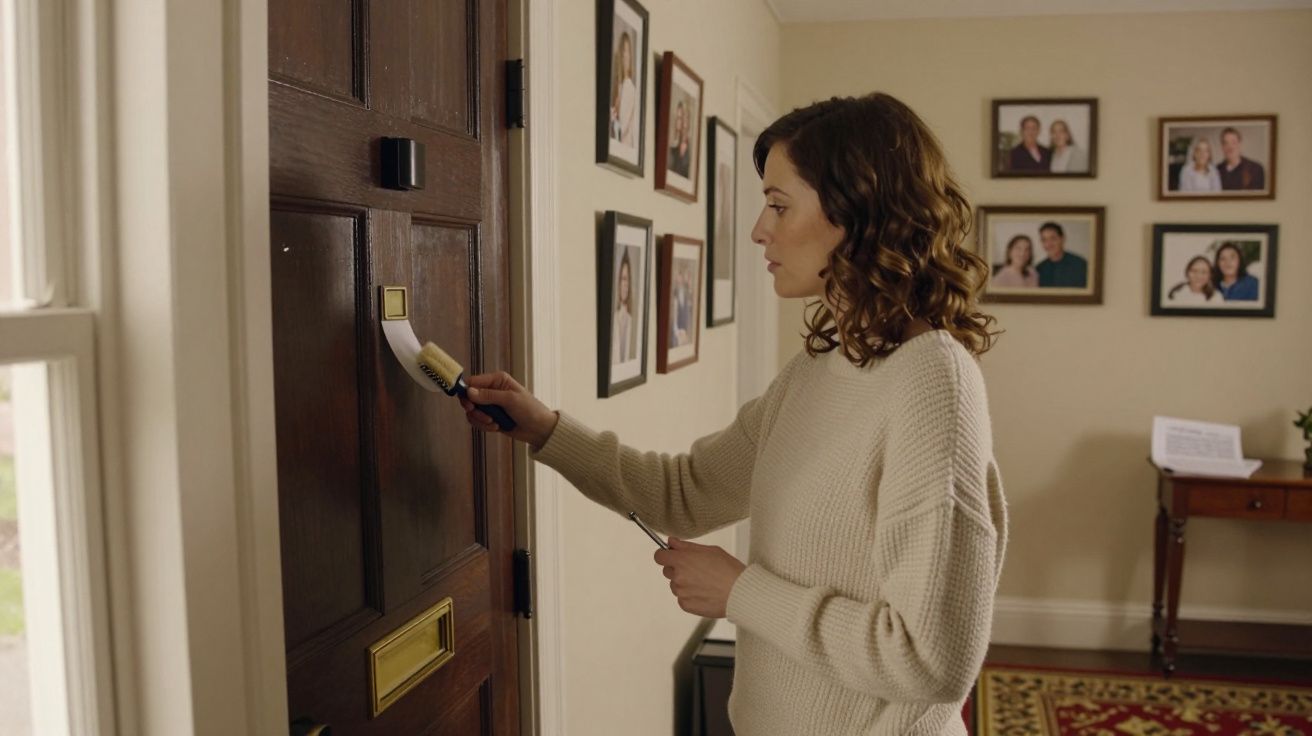
I’m in a warm house with the heating on, and still the hallway feels like a bus shelter. You pull your coat on to answer the door, the floor is cold through your socks, and there’s that thin, steady ribbon of air you can’t quite locate until you stand right over the letterbox.
Most people blame “old doors” or “the seal’s gone”, then put it on the never-ending list of jobs. Insulation fitters see it differently: this is often one small gap doing outsized work. And the fastest fix isn’t a new door or a carpenter - it’s a £3 brush strip on the letterbox that you can swap in about 15 minutes.
Why the hallway stays cold (even when the boiler’s doing its job)
A front door is a pressure point. Warm air wants to leak out, cold air wants to push in, and any opening becomes a one-way ticket for draughts. Letterboxes are basically designed holes in the middle of your door, often with tired springs and a flap that doesn’t sit flat.
Fitters describe it as “a mini chimney effect at knee height”. You don’t need a gale outside for it to matter. A small, constant leak will keep the hall from ever catching up, and it can make the rest of the house feel harder to heat because you’re constantly losing warmed air to the coldest zone.
If your hallway feels colder than the rooms either side, the letterbox is one of the first things to test.
The £3 swap: a brush strip that actually seals
The simple upgrade is a letterbox brush (sometimes sold as a draught-excluding letterbox seal). It’s a pair of bristles that sit tight around the opening, so when the flap moves, the brushes flex - and then close up behind it.
The difference is not “cosmetic”. It changes how the door behaves day-to-day:
- Stops that constant thread of cold air you feel around your ankles
- Reduces the rattle and flap-bang in wind
- Cuts the “cold patch” effect in the hall where warm air dies at the doorstep
You can buy them for a few pounds online or at any DIY shop. The point isn’t the brand; it’s getting the size right and fitting it so the brushes actually touch.
The 15-minute check-and-fit (what fitters do first)
Before you spend money, do a quick diagnosis. Insulation fitters use boring methods because they work.
- Hand test: On a windy day (or when it’s cold outside), put your hand around the letterbox edges and along the flap. If you can feel a stream, you’ve found a major culprit.
- Paper test: Close the door with a strip of paper near the letterbox flap edge. If it slides out easily, the flap isn’t sealing.
- Torch test (night): Turn the hall light off, shine a torch from outside around the letterbox area. Any visible glow means air gaps.
Fitting is usually straightforward: remove the old inner sleeve/brush (often just small screws), slot the new brush in, and check the flap still opens freely. If the postie has to wrestle it, you’ve gone too tight.
If your door has a loose metal flap with no inner sleeve at all, the brush insert is often the biggest “per pound” improvement you can make.
What to buy (so you don’t end up with the wrong thing)
Letterboxes aren’t one-size-fits-all. Measure the opening before you order, and match the fixing style.
Look for:
- Correct aperture size (the actual cut-out in the door)
- Internal vs external fit (some kits are two-part, some replace only the inside)
- Brush density (too sparse won’t seal; too dense can snag post)
- A stiff inner frame so it doesn’t warp when screwed down
If you’re renting or you don’t want to drill, there are stick-on draught solutions - but fitters tend to prefer a proper sleeve/brush because it stays aligned and survives daily use.
“I fitted it - why is it still draughty?”
Sometimes the letterbox is only half the story. The hall can still feel cold if the door perimeter is leaking or if there’s a gap under the door big enough to post a pizza leaflet through.
A quick triage list fitters use:
- Gap under the door: add a threshold strip or a proper draught excluder (avoid fluffy snakes that become trip hazards).
- Perimeter seals: check the rubber compression seal around the frame; if it’s flattened, split, or missing at corners, replace it.
- Keyhole and handle: a cheap escutcheon cover or keyhole cover can stop a surprising leak.
- Unheated hall + tiled floor: even with no draughts, cold surfaces will sap warmth; a runner can change how it feels instantly.
The letterbox brush is still worth doing because it’s fast and cheap - it just shouldn’t be treated as magic if the rest of the door is effectively “open”.
The small win that makes the rest of the house feel calmer
This isn’t about chasing perfect temperatures. It’s about removing that one constant leak that keeps the hallway in permanent winter mode. When the draught stops, the heat you’re already paying for has a chance to settle, and the house feels less like it’s fighting itself.
If you’ve been turning the thermostat up because the front of the house always feels chilly, a £3 brush strip is a rare thing in home energy: a small job that you notice the same day.
FAQ:
- Will a letterbox brush stop all draughts at the front door? It can remove a major one, but you may still need to address the door’s perimeter seal or the gap underneath.
- Is it easy to fit without tools? Many sleeves are screw-fixed, so you’ll usually need a screwdriver. The job is still typically under 15 minutes.
- Will it make it harder for post to come through? If the brushes are very dense or misaligned, yes. Choose the right size and check the flap opens smoothly after fitting.
- What if I don’t have a letterbox (just a post slot elsewhere)? The same principle applies: any open slot needs a brush or seal. Check door gaps, keyholes, and frame seals next.
- Does it actually save money or just feel nicer? It primarily improves comfort, but reducing uncontrolled air leakage can also reduce heat loss - especially in a cold, unheated hall.




Comments
No comments yet. Be the first to comment!
Leave a Comment