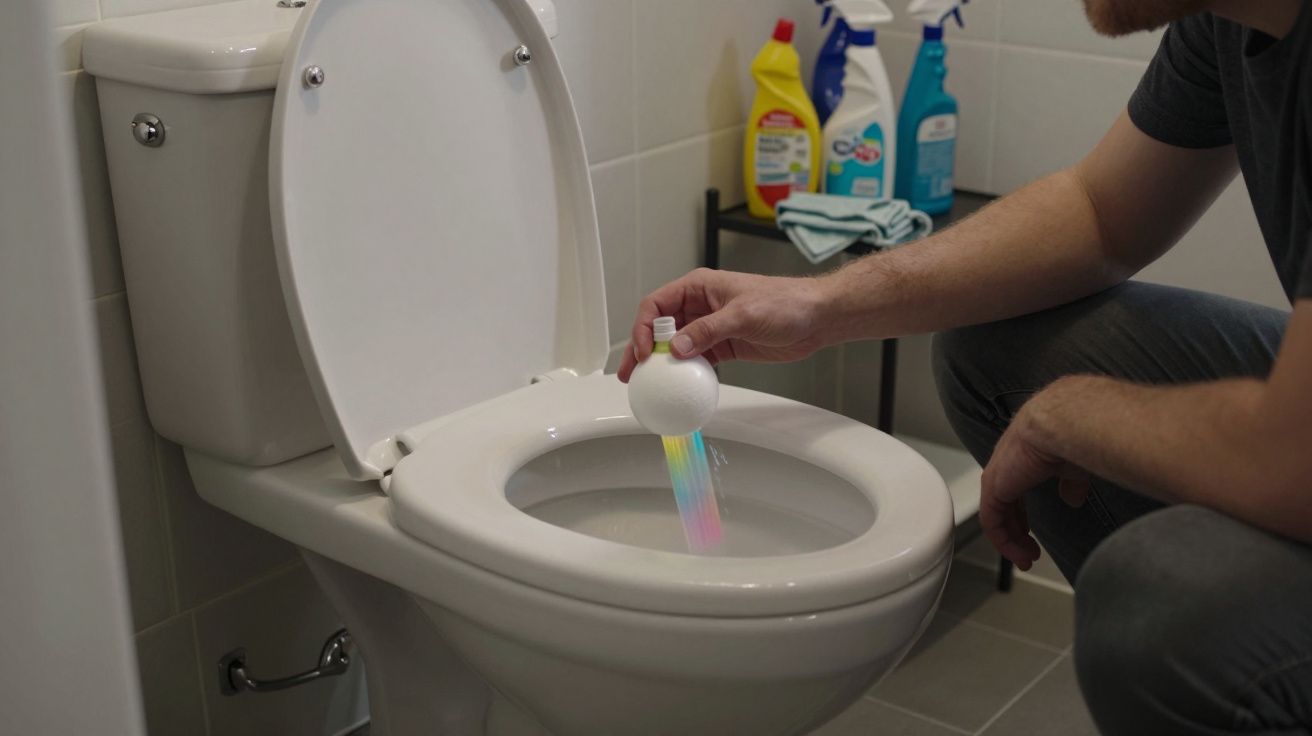
Influencer reels show sparkling bowls, pastel bath bombs fizzing away and captions promising “no scrubbing, no chemicals”. In bathrooms across the UK, people are dropping homemade toilet bombs, dishwasher tablets and mystery powders straight into the pan – convinced they’ve hacked their cleaning routine.
Behind the scenes, plumbers say they are quietly booking in more call-outs for blocked, corroded and leaking loos. The common thread: repeated “fizz” treatments in toilets and pipework never designed for them.
Some issues appear fast – slow-flushing loos, strange smells, grey sludge in the trap. Others build up out of sight until a joint fails or a pipe cracks. By the time the damage shows, the only “hack” left is an expensive repair.
What the “toilet fizz” hack actually is
Under different names – toilet bombs, fizz tabs, pan soaks – the idea is similar. You drop a solid tablet or a mix of powders into the bowl, watch it fizz and foam, then flush.
The ingredients vary:
- Homemade toilet bombs made from bicarbonate of soda and citric acid, sometimes with washing-up liquid or essential oils.
- Dishwasher tablets or laundry pods tossed into the pan “to clean for you overnight”.
- Layered products – for example, pouring in bleach and following with vinegar or a descaler to “boost the reaction”.
The promise is seductive: the fizz reaches under the waterline and into the trap, loosening limescale and staining without elbow grease. In videos, the end result always looks the same: white porcelain, clear water, a quick flush, and a neatly edited “after”.
On camera, you see the sparkle and the bubbles. You don’t see what’s happening further down the pipework.
Why social media swears by it
The hack ticks every box for viral content. It’s visual, oddly satisfying and easy to copy with ingredients people already have at home. Cleaning influencers lean on a few strong selling points:
- “No scrubbing needed” – perfect for anyone who hates getting close to the bowl.
- “Natural” or “non-toxic” branding when citric acid and bicarbonate are used.
- “Multi-use products” – using the same dishwasher tabs in the kitchen and bathroom feels thrifty.
- Instant gratification – you see dramatic fizz in seconds, which feels like proof it’s working.
For renters, those with mobility issues or busy parents, the idea of dropping in a tablet and walking away is genuinely appealing. Brands have noticed too: some now market toilet fizz products with soothing colours, perfume-heavy scents and “eco” labels.
But plumbers point out that the camera angle never shows the pipework, the overflow, or the rubber seals that keep your system watertight.
What plumbers see a few months later
Across the UK, tradespeople are reporting similar patterns. A household adopts a fizz hack, loves it, and repeats it several times a week. At first everything looks fine. Then, slowly, problems start to stack up.
Typical issues they link to repeated fizz treatments include:
Softened or perished seals
Strong acids and alkalis can attack rubber rings, sealant and flexible connectors in and around the toilet, leading to weeping joints and leaks.Dislodged limescale in the wrong place
Heavy descaling can break up thick limescale, but instead of washing away cleanly it can lodge further down the pipe, narrowing the flow.Greasy, gritty sludge
When fizzy mixes are combined with soap-based products, fat and hair in the system, they can create a paste that settles in bends and traps.Septic tank disruption
In homes not on mains sewerage, repeated chemical blasts can upset the bacteria that keep a septic tank working, leading to smells and overflows.
“People call us out for a ‘mystery blockage’ and proudly tell us they’ve stopped using bleach,” explains one south London plumber. “Then they show us a cupboard full of DIY toilet bombs.”
Crucially, many of these problems show up within months, not years, especially in older properties with narrow pipework or marginal fall. The toilet itself may look immaculate while the waste pipe is quietly clogging just out of sight.
The chemistry problem no one shows on camera
Even when ingredients sound gentle, the reactions they create are not always kind to plumbing.
Acid plus alkali equals salts and gas
Bicarbonate of soda and citric acid fizz because they neutralise each other, releasing carbon dioxide gas. That gas lifts grime, but the remaining liquid can still be mildly corrosive with repeated use.Mixing products can create dangerous fumes
Combining bleach with acids (like vinegar, citric acid or some descalers) can release chlorine gas, which is harmful to lungs and eyes – especially in a small, closed bathroom.Strong detergents cling to pipe walls
Dishwasher tablets are formulated for steel, glass and very hot water with a powerful flow. In a toilet, they can leave concentrated residues on rough pipe interiors, encouraging more build-up over time.Fragrance oils aren’t just “a nice smell”
Essential oils and synthetic fragrances are hydrophobic. In cool, slow-moving water they can coat pipes and catch floating debris, rather than rinsing cleanly away.
The individual reaction you see fizzing in the bowl may be short-lived, but the combined effect on joints, seals and pipe surfaces can be significant when you repeat it every few days.
Which viral hacks worry plumbers most?
Not all shortcuts are equal. Some are mostly a waste of money; others can accelerate real damage.
| Hack / Product | What influencers promise | What plumbers report |
|---|---|---|
| Homemade bicarb + citric bomb (occasional use) | Gentle, eco fizz that freshens and lifts limescale | Generally low risk in moderation, but no fix for structural blockages |
| Dishwasher tab in the toilet | “Cleans everything overnight” with one product | Undissolved chunks, gritty residue and contribution to downstream blockages |
| Layering bleach, vinegar & descaler | “Supercharged deep clean” | Risk of toxic gas, attacks on seals, rapid corrosion in older pipework |
Used once in a while and flushed thoroughly, a simple bicarb-and-citric fizz is unlikely to wreck a modern system. The danger comes when:
- You use multiple products together “for extra power”.
- You leave them to sit for hours in low-flow loos.
- You already have marginal plumbing – long runs, flat pipes or an ageing soil stack.
In those conditions, “months” can be enough time for a pattern of over-cleaning to show up as leaks or blockages.
Safer ways to get a fresh, white loo
You do not need to revert to harsh old-school habits to protect your pipes. You just need to work with how your plumbing is designed to function.
1. Let the brush do the hard work
Mechanical action is still the hero of bathroom cleaning.
- Use a decent toilet brush and a targeted cleaner recommended for ceramic.
- Focus on the waterline, under the rim and the outlet where limescale and bacteria gather.
- A weekly, thorough scrub is far more effective than daily fizzing with no agitation.
A five-minute scrub once a week usually beats five different “miracle” products spread across it.
2. Choose products made for toilets – and use less of them
Formulations tested for toilets and UK wastewater systems are safer than kitchen products repurposed for the pan.
- Look for WC-specific descalers and cleaners with clear dilution and contact-time instructions.
- Avoid piling products on top of one another; stick to one cleaner at a time.
- Rinse well: two full flushes after a strong treatment help move loosened residue along.
If you prefer lower-impact options, check labels for septic-tank compatibility and avoid anything advising heavy daily use.
3. Protect your pipework, not just the bowl
Think beyond what you can see.
- Do not put dishwasher tablets, laundry pods or washing machine cleaners down the toilet – ever.
- Keep wipes, “flushable” cloths, cotton buds and dental floss out of the system; they tangle with any residue and build instant blockages.
- If you live in a hard-water area, consider a water softener or regular, mild descaling with proper products rather than aggressive blitzes.
For properties with septic tanks, ask your service engineer which cleaners are compatible and how often you can safely use them.
4. Watch for early warning signs
Catching problems quickly can save both money and floors.
Call a plumber or your housing association if you notice:
- Slower flushing or water rising unusually high before it drains.
- Gurgling noises in nearby basins or baths after flushing.
- Persistent odours despite cleaning.
- Damp patches, staining or flaky paint around the base of the toilet or on ceilings below.
Mention any cleaning experiments you have tried – it is far easier for a professional to help if they know what has been going down the pipes.
How to keep the “satisfying” part without the damage
If you genuinely enjoy the fizz and foam of cleaning content, you do not necessarily need to give it up – you just need to relocate it.
- Use bicarb-and-vinegar fizz in kitchen sinks or plugholes very sparingly, as a freshener rather than a cure for serious clogs.
- Keep any experimental mixes out of toilets and away from sealed waste systems.
- When in doubt, treat viral hacks as entertainment, not instructions.
You can still have that “before and after” moment in your bathroom. It just comes from good tools, suitable products and a realistic routine, not from dropping the contents of your cleaning cupboard into the pan and hoping for the best.
FAQ:
- Is it ever safe to use homemade toilet fizz bombs?
Used occasionally in a modern, well-maintained loo, a simple mix of bicarbonate of soda and citric acid is unlikely to cause major harm. Problems arise with frequent use, overloading the bowl with several products at once, or using them in older or already compromised pipework.- Can I put dishwasher tablets down the toilet to clean it?
Plumbers strongly advise against it. Dishwasher products are designed for different materials, temperatures and flow rates. In toilets they can leave residue, contribute to sludge and make existing blockages worse.- What if I’ve already been using these hacks for months?
Stop combining products and return to a basic routine: a toilet-specific cleaner, a brush, and regular flushing. Watch for any warning signs of blockages or leaks and ask a plumber to inspect your system if you are concerned.- Are “natural” or “eco” fizz products automatically safe for pipes?
Not necessarily. “Natural” describes the origin of ingredients, not how they behave in confined plumbing. Always follow the instructions, avoid mixing them with other cleaners and limit how often you use them.- How often should I deep-clean my toilet without risking damage?
For most households, a weekly clean with a brush and an appropriate cleaner is enough. In busy homes or shared houses, you might increase to twice weekly. Reserve stronger descalers for monthly or as-needed use, following the label closely.



Comments
No comments yet. Be the first to comment!
Leave a Comment