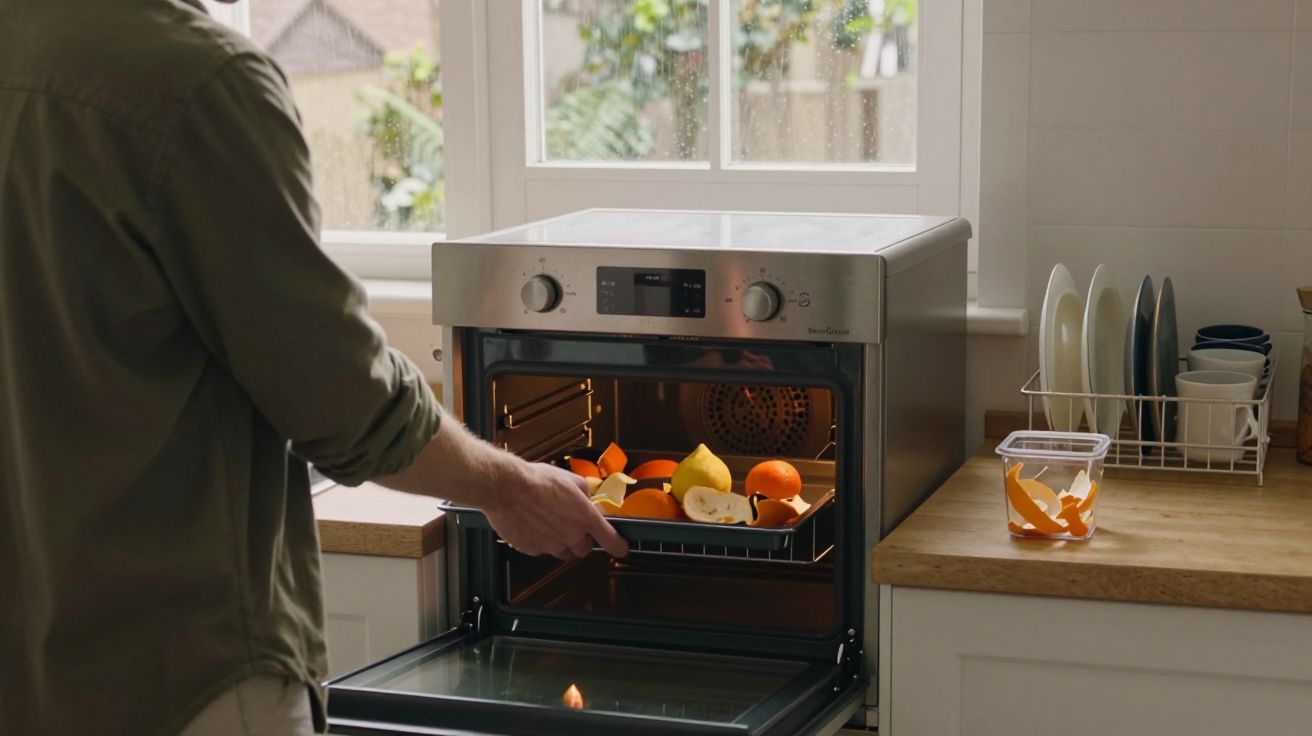
A Sunday afternoon, drizzle outside, washing up stacked in the sink. I opened the oven to shove in a tray of chips and was hit by that vague, stale smell of last week’s lasagne and this morning’s toast. Not disgusting, just… lived‑in. The kind of scent that says “I meant to clean” more than “I just did”.
On the counter, there was a little pile of orange and lemon peels from a batch of sliced fruit. Instead of binning them, I dropped them on a baking tray with a splash of water and shoved them into the still‑warm oven. Ten minutes later the flat smelled, impossibly, as if I’d scrubbed it from skirting board to ceiling. No heavy perfume, no sickly vanilla, just that faint hotel‑freshness you wish you could bottle.
Candles try to fake clean. This trick smells like you actually did the work.
Why citrus peel beats a scented candle on a Tuesday night
A scented candle is theatre: wax, synthetic fragrance and a marketing promise. It can be lovely, but it often layers on top of whatever odours are already there. Citrus peel in a low oven does something quieter and more useful. The heat slowly releases essential oils and a wisp of steam, which mingle with the air instead of shouting over it.
You’re also using what would otherwise be waste. Orange halves from breakfast, the rind of a grapefruit you cut for a salad, the end of a lemon that finished your tea - they all carry pockets of oil in their skin. Warm those, and the room shifts from “someone cooked here” to “someone just opened the window and wiped every surface”.
The result isn’t a strong perfume. It’s closer to the smell of clean washing drying indoors or stepping into a freshly mopped hallway in an old city hotel. Subtle, clear, and oddly motivating; you suddenly feel like finishing the washing up just to match the mood of the air.
The oven trick, step by step
You don’t need a recipe so much as a routine. It fits around whatever you’re already cooking.
Save your peels.
Keep a small container in the fridge or freezer for citrus skins: lemon, orange, lime, grapefruit, even clementines. Rinse briefly if they’re sticky.Check your oven mood.
This works best just after you’ve cooked, when the oven is switched off but still warm. If it’s cold, set it to a low heat: around 100–120°C (80–100°C fan) is enough. You want gentle warmth, not roasting.Prepare a tray or oven‑safe dish.
Spread a handful of peels in a single layer. Add:- A splash of water (1–2 tablespoons) to stop them drying too fast.
- Optional: a cinnamon stick, a few cloves or a piece of star anise if you like a warmer scent.
Let the oven do the work.
Slide the tray in. If you’ve just finished cooking and the oven is off, close the door and walk away for 20–30 minutes. If the oven is on low, leave the door slightly ajar and check every 10 minutes.Vent and enjoy.
When the peels look dry at the edges but not charred, turn the oven off (if it wasn’t already) and crack the kitchen window for a couple of minutes. The citrus steam drifts out of the oven and into the rest of your flat.
Aim for gentle warmth and visible steam, never smoke.
You’ll know you’ve hit the sweet spot when the air smells clear and light, not like marmalade or pot‑pourri.
Small tweaks that make a big difference
The basic version is just peel and water. A few small adjustments can tailor it to your space and mood.
Match the fruit to the room feel.
- Lemon: sharp, “just cleaned the bathroom” freshness.
- Orange: softer, cosy, ideal for evenings.
- Grapefruit: modern spa vibe, a bit more grown‑up.
- Lemon: sharp, “just cleaned the bathroom” freshness.
Add herbs if you have them.
A small sprig of rosemary, a few thyme stalks or a torn bay leaf can edge the scent towards “Mediterranean kitchen” rather than “breakfast juice”.Use it as a reset after cooking.
Do a quick wipe of the hob, then slide your citrus tray into the already‑warm oven. By the time you’ve packed the dishwasher, the whole place smells like you’ve done more than you actually have.Keep it tiny in small flats.
In a studio or bedsit, a few strips of peel are enough. Overdoing it can make the air feel heavy rather than light.
Let’s be honest: nobody is going to boil a pan of spices every night or keep three reed diffusers topped up. This is about a 30‑second habit that fits into what you already do.
Common mistakes (and how to avoid smoky drama)
Like most “grandma tricks”, this works beautifully - until you push it just a bit too far.
Temperature too high
Cranking the oven to 180°C and forgetting the peels will just roast them into brittle, brown husks and might fill the kitchen with smoke. Stay low, especially with fan ovens, and check early the first time.Too long, no water
Completely dry peel on a hot metal tray can scorch. A spoonful of water at the start and a watchful eye the first few times are your best fire insurance.Dirty oven, dirty smell
If the oven has old fat spattered on the base, heating anything will simply re‑release that odour. A quick wipe of spills and a tray on a clean shelf make a huge difference.Leaving it on while you go out
Tempting, but not worth it. This is a “I’m home pottering about” ritual, not a background appliance. Keep it in the same category as a candle: enjoyed while you’re there.
If you do overdo it and get a burnt smell, turn the oven off, open the windows wide, and start again another day with more water and less heat.
Beyond the smell: why this tiny ritual feels so satisfying
On paper, you’re just warming up rubbish. In practice, this trick quietly rewires how your home feels.
You’re taking something you already have - citrus peel, residual heat - and turning it into a sense of order and care. That’s part of why it feels so “clean”: you’re pairing it with small visible wins, like an empty sink or a wiped worktop, and your brain connects the dots.
There’s also the question of control. Plug‑ins, sprays and candles dictate the scent for hours, sometimes long after you’re tired of it. With peel and an oven, you decide the intensity and when it stops. You can switch from lemon‑bright on a Monday to orange‑soft on a rainy Friday without buying a single new thing.
And then there’s the quiet environmental smugness. No extra packaging, no paraffin wax or mystery fragrance blend. Just your normal food shop, stretched one step further.
Quick combinations to try
Think of it as a mood board for your nose.
“Just mopped the floor”
Lemon peel + a bay leaf + plenty of steam. Use after a light tidy to amplify that just‑cleaned illusion.“Winter Sunday, slow roast in the oven”
Orange peel + 1 cinnamon stick + 2–3 cloves. Careful: a little clove goes a long way.“Spa bathroom”
Grapefruit peel + rosemary sprig. Run the oven trick while you’re cleaning the bathroom or folding towels.“End of week reset”
Mixed citrus peels from the fruit bowl + whatever herb stems are left. Use up odds and ends before the weekend shop.
You’ll quickly find a couple of favourites that feel like your home rather than somewhere else’s show flat.
Summary table
| Peel type | Vibe | Best moment to use |
|---|---|---|
| Lemon | Crisp, ultra‑fresh | After cooking fish or frying |
| Orange | Warm, cosy | Evenings, winter afternoons |
| Grapefruit | Modern, airy | Before guests arrive |
| Mixed citrus | Balanced, lively | Weekly “big tidy” |
FAQ:
- Is this safe for every oven type?
Yes, in principle it works with gas, electric and fan ovens, as long as you keep the temperature low and don’t leave the peels unattended for long. Always err on the side of less heat and more checking.- How long does the fresh smell last?
In a small flat, you’ll notice it for an hour or two, especially if doors between rooms are open. It’s more of a gentle background than a strong perfume.- Can I reuse the peels afterwards?
Once they’ve been heated, most of the oils are gone. Let them cool and compost them or bin them; this is a one‑time job for each batch.- Does it actually remove bad odours or just cover them?
It won’t erase something very strong (like burned food), but by airing, adding a little humidity and releasing citrus oils, it softens lingering cooking smells and makes the room feel noticeably fresher.- Can I do the same thing on the hob instead of in the oven?
You can simmer citrus peels in a small pan of water on the lowest heat for a similar effect. Just keep an eye on the water level so it doesn’t boil dry.


Comments
No comments yet. Be the first to comment!
Leave a Comment