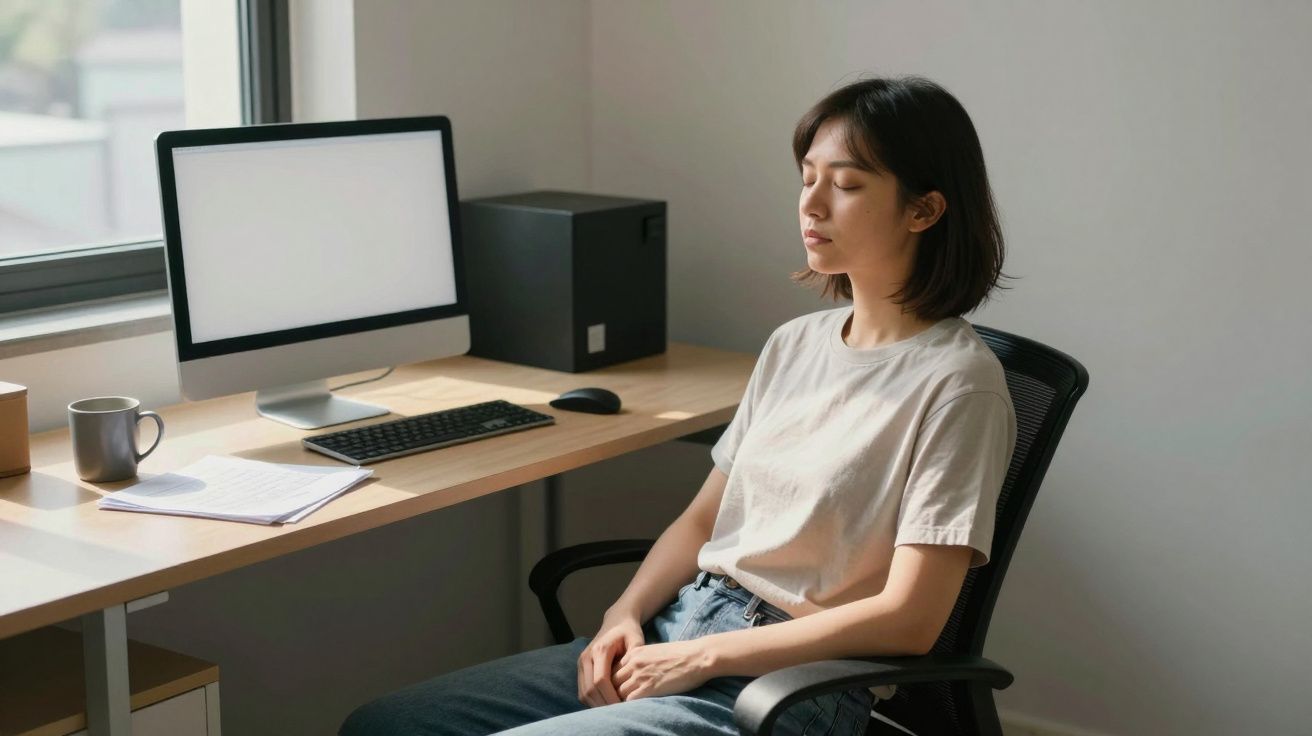
The slump usually arrives quietly. Your eyes glaze over a spreadsheet, your hand drifts to the mug that’s already empty, and the idea of a “quick 20‑minute nap” is laughable because there’s nowhere to lie down and four emails marked “urgent” just landed.
Most of us reach for caffeine or scrolls when our brain hits that mid‑afternoon wall. Both wake you up a bit, neither leaves you feeling deeply rested. There is, however, a third option that sleep clinicians use with shift workers, new parents and students: a short, structured breathing pattern that calms the nervous system without knocking you out.
Eight minutes is enough. Done properly, it acts like a reset button: mind clearer, body less wired, no groggy hangover and no need for a dark, quiet room.
Why an 8‑minute breathing reset can beat yet another coffee
When you’re tired, your body is often stuck in a low‑level stress state: shallow chest breathing, tight shoulders, a heart rate that never quite settles. Coffee jolts you on top of that. It sharpens focus for a while, but it does nothing to ease the underlying tension, and it can make sleep harder later.
Slow, deliberate breathing does the opposite. It taps into the vagus nerve, the wiring that links your lungs to the “rest and digest” arm of the nervous system. Lengthening the exhale in particular tells your body it is safe to power down a notch. Heart rate eases, blood pressure dips slightly, and brainwaves drift towards the same slower patterns seen in early stages of sleep.
Sleep specialists often teach some form of slow, extended‑exhale breathing as a tool for both falling asleep and riding out mid‑afternoon fatigue without a full nap.
The result is not a knock‑you‑out coma; it’s a drop of quiet in the middle of the day. Eight minutes of this kind of breathing gives your body a mini “parasympathetic bath” – a short spell where repair and reset can actually happen instead of more fight‑or‑flight.
The pattern sleep specialists keep coming back to
There are dozens of branded breathing methods, but the core idea most experts agree on is simple: breathe more slowly than usual, through your nose, and make the exhale longer than the inhale.
For mid‑afternoon use, a gentle variation known as 4‑2‑8 breathing strikes a useful balance:
- It is slow enough to calm the system.
- It is structured enough to give your mind something to follow.
- It is not so intense that you feel dizzy or end up half‑asleep at your desk.
Here’s what the pattern looks like:
- Inhale through your nose for 4 seconds.
- Pause softly at the top for 2 seconds.
- Exhale through your nose or pursed lips for 8 seconds.
One full cycle takes 14 seconds. Over eight minutes, that’s around 30–34 slow, even breaths – far fewer than the 100‑plus shallow breaths most of us take in the same time when stressed.
Step‑by‑step: your 8‑minute 4‑2‑8 reset
You do not need a mat, music or a meditation app. Just somewhere you can sit without being interrupted for a few minutes.
Set the scene (30–60 seconds)
Sit upright with your back supported if possible, feet flat on the floor. Rest your hands loosely in your lap. If you’re comfortable doing so, close your eyes or soften your gaze on one spot. Let your jaw unclench and drop your shoulders an inch.Find your natural breath (about 1 minute)
Notice how you’re breathing without trying to change it. Feel the air moving in through your nose, down into your chest and belly, and back out. This quick check‑in makes the shift to slower breathing feel less forced.Start the 4‑2‑8 pattern (about 6 minutes)
Count silently in your head:- Inhale through your nose for 1‑2‑3‑4. Let your belly expand a little.
- Gently hold for 1‑2. No straining; just a soft pause.
- Exhale for 1‑2‑3‑4‑5‑6‑7‑8, letting your ribs and belly fall.
Repeat. If eight seconds feels too long at first, shorten it to six and gradually extend the exhale over a few sessions. The key is comfort and continuity, not hitting exact numbers.
- Finish with a quick body check (about 1 minute)
Let go of the counting and breathe normally. Scan from head to toe: jaw, neck, shoulders, chest, stomach, legs. Notice what feels different – even if it’s just “slightly less frazzled”. Open your eyes fully, roll your shoulders once or twice, and stand up slowly before you go back to work.
Across eight minutes, most people notice three shifts: thoughts feel less tangled, eyes feel less strained, and the urge to “just lie down” eases into something more manageable.
When to use it (and when not to)
This pattern works best as a planned pause, not an emergency brake at the point of collapse. Common windows where it fits naturally:
- Just after lunch, before diving back into emails.
- Between back‑to‑back meetings, especially if you’ve been “on” socially.
- In the car before you drive home, parked, with the engine off.
- While rocking a baby who refuses to nap, when you can’t nap either.
You can also use a shortened 2–3 minute version before tasks that need focus: revising for an exam, starting a big report, or going on stage to present.
There are a few times to be cautious. If you have a history of serious respiratory or cardiac issues, or conditions like panic disorder that make breath‑holding uncomfortable, keep the pattern very gentle and skip the pause at the top. And avoid doing this while driving, operating machinery or anywhere you cannot safely close your eyes or let your attention soften.
How it stacks up against a power nap
Power naps have their place. They are excellent for people who can fall asleep quickly and wake easily. But they are not always practical at 15:00 in an open‑plan office.
Here’s how the 8‑minute breathing reset compares:
| Option | What it’s good for | The catch |
|---|---|---|
| 15–20 min power nap | Deep restorative boost, improved reaction time | Needs a quiet place, risk of grogginess if you over‑sleep |
| Strong coffee | Short‑term alertness, familiarity | Can spike anxiety, affects night‑time sleep, no real “rest” |
| 8‑minute 4‑2‑8 breathing | Calms stress response, clears mental fog without sedating you | Requires a bit of privacy and willingness to sit still |
For people who struggle to nap, a breathing reset offers most of the “woken up but not wired” benefits, with almost none of the logistics.
Many sleep doctors now recommend breathing drills like this instead of late‑day caffeine. They also use them alongside sleep‑hygiene advice to help patients who wake unrefreshed despite enough hours in bed.
Mistakes that blunt the effect
The technique is simple, but a few small missteps can make it feel less helpful than it is.
Trying too hard to “do it right”
If you’re clenching your jaw and mentally scolding yourself for losing count, you’re adding stress, not removing it. Treat the count as a guide, not a test. If you drift off for a few breaths, just gently start again.Breathing only in your chest
High, shallow breaths keep the nervous system on edge. Aim to let the breath reach the lower ribs and belly. A hand on your stomach for the first minute can help you feel the movement.Going too fast, then getting light‑headed
Extending the exhale is calming; forcing big, rapid breaths can make you dizzy. If that happens, pause, breathe normally for a minute, and restart with smaller, softer breaths and a shorter count.Checking your phone mid‑reset
Every notification yanks your brain back into “task mode”. Put the phone on silent or do‑not‑disturb for the full eight minutes. This is the point.
Think of it less as a performance and more as a mini practice: the benefit accumulates as you repeat it day after day, even if individual sessions feel ordinary.
Making it a quiet ritual in your day
Habits stick when they’re anchored to something you already do. Instead of promising yourself vague “mindfulness breaks”, attach this 8‑minute reset to a fixed cue:
- After you rinse your lunch dishes.
- As soon as you get back from the school run.
- Right before your mid‑afternoon cup of tea (or in place of it).
You can also share the practice. Teams increasingly use one or two minutes of slow breathing at the start of long meetings to cut through collective fatigue. Parents teach the pattern to teenagers revising for exams as a portable, drug‑free focus tool. It is quietly contagious.
You may still need proper sleep, and no breathing drill can replace a night in which you actually rest. But for those afternoons when a nap is impossible and another espresso feels unwise, eight minutes of structured breathing is a surprisingly powerful middle way: simple, discreet, and just restorative enough to carry you through.
FAQ:
- How often should I do the 8‑minute pattern? Once a day is a good start. Many people find twice daily – late morning and mid‑afternoon – gives a noticeable steadiness without feeling like a chore.
- What if I get bored counting? You can switch to a quiet word on the exhale (such as “soft” or “calm”) or use a timer that chimes gently every 14 seconds. The structure matters more than the exact numbers.
- Can I lie down instead of sitting? Yes, if you have somewhere appropriate and won’t fall fully asleep. Lying on your back with knees bent can deepen the relaxation, but sitting is easier to fit into office life.
- Will this help me fall asleep at night too? Many people use the same 4‑2‑8 or a slightly slower version in bed. The mechanism is similar: extended exhales signal safety, which makes it easier for the brain to drift off.


Comments
No comments yet. Be the first to comment!
Leave a Comment